
Smart Water Level Monitoring Systems for Eco Friendly Home’s
: August 2026
Water is one of the most valuable resources in every home. Many families now use energy-saving lights, efficient appliances, and solar power, but water management is often overlooked. A Smart Water Level Monitoring Systems for Eco Friendly Homes helps homeowners use water more wisely by showing how much water is available in a tank at any time.
Instead of climbing to the roof or opening a tank lid to check the water level, a smart water monitor can send the information directly to a phone or a small wall display. It can also warn you when the tank is almost empty or nearly full. This helps prevent water waste, reduces overflow, and makes daily water use easier.
For homes with rooftop tanks, underground tanks, rainwater storage tanks, or garden water tanks, a smart water level monitor can be a practical and eco-friendly upgrade.
Quick Answer
A Smart Water Level Monitoring Systems for Eco Friendly Homes is a device that checks the water level in a storage tank and shows the information on a phone or display. It helps save water, prevent overflow, support rainwater harvesting, and improve water management at home.
Best for: rooftop tanks, underground tanks, rainwater tanks, garden water storage, and sustainable homes.
Table of Contents:
- Introduction
- What Is a Smart Water Level Monitoring System?
- Why Eco-Friendly Homes Need Water Monitoring
- How a Smart Water Level Monitor Works
- Main Types of Home Water Level Monitors
- How Smart Monitoring Prevents Water Waste
- Common Mistakes to Avoid
- Water-Saving Advice from Public Agencies
- Frequently Asked Questions
- Conclusion
Introduction
Water shortages, rising utility costs, and changing weather patterns are making water conservation more important than ever. Many homeowners want to reduce their environmental impact, and one of the easiest ways to start is by understanding how much water their home uses.
A water level monitoring system for home use gives clear information about the amount of water stored in a tank. When people can see the water level easily, they are more likely to use water carefully.
These systems are especially helpful for homes that collect rainwater, store water for emergencies, or rely on pumps to fill rooftop tanks. They improve convenience and support a more sustainable lifestyle.
What Is a Smart Water Level Monitoring System?
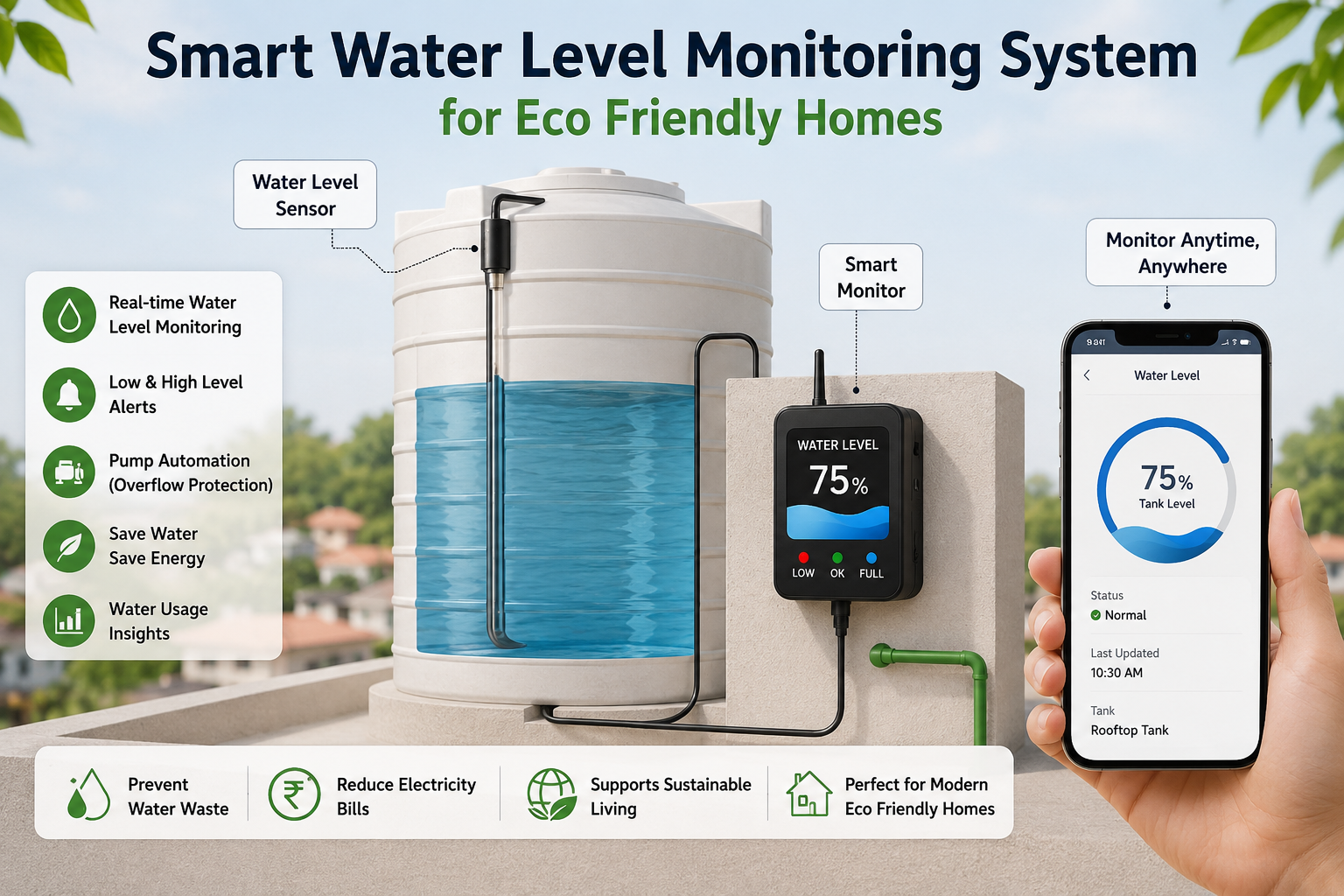
A Smart Water Level Monitoring Systems for Eco Friendly Homes is a modern water-checking solution that helps homeowners know exactly how much water is stored in their tank at any time. Instead of checking the tank manually, the monitor measures the water level continuously and shows the result on a small display or sends it to a mobile phone. This makes daily water management easier, faster, and more reliable.
These systems are designed for homes that want to reduce water waste and use resources more responsibly. They are commonly installed in rooftop tanks, underground storage tanks, rainwater harvesting tanks, garden water tanks, and emergency water storage tanks.
The main purpose of a Smart Water Level Monitoring Systems for Eco Friendly Homes is to improve water efficiency. When homeowners can see the current water level clearly, they can avoid unnecessary water use, prevent tank overflow, and plan household activities more effectively. This is especially valuable in areas where water shortages, droughts, or seasonal supply interruptions are common.
A typical home setup includes:
- A water level reader placed on or inside the tank
- A display panel or phone connection
- A power source such as a battery, household electricity, or a small solar panel
What makes it “smart”?
Unlike a traditional water gauge, a smart monitor can:
- Show the exact water level at any time
- Send a warning when the tank is nearly empty
- Alert the homeowner when the tank is almost full
- Help stop the pump before overflow occurs
- Keep a record of water level changes over time
For example, if a family uses more water than usual during a hot summer week, the monitor can show the drop in tank level immediately. This allows the family to reduce water use before the tank becomes empty.
In simple terms, a Smart Water Level Monitoring Systems for Eco Friendly Homes acts like a water assistant for the household. It helps families save water, avoid waste, protect their water storage system, and support a more sustainable lifestyle without adding extra daily work.
Some models only show the water level, while others can also stop the pump automatically when the tank becomes full.
Why Eco-Friendly Homes Need Water Monitoring?
Eco-friendly homes are designed to use natural resources carefully, and water is one of the most important resources to protect. A Smart Water Level Monitoring Systems for Eco Friendly Homes helps homeowners understand how much water they have, how quickly they are using it, and when they need to take action. This simple awareness can lead to better habits and less water waste.
Many households lose water without realizing it. Tanks may overflow, garden watering may continue longer than necessary, or small leaks may go unnoticed for weeks. When the water level is checked automatically, these problems are easier to spot and fix quickly.
How water monitoring supports a greener home.
Prevents water overflow: When a storage tank becomes full, excess water can spill out and be wasted. A smart monitor warns the homeowner before this happens and can help stop the pump in time.
Encourages responsible water use: Seeing the water level regularly reminds family members to use water more carefully for bathing, cleaning, laundry, and gardening.
Supports rainwater harvesting: Homes that collect rainwater can make better use of stored rainwater when they know exactly how much is available.
Reduces electricity use: Water pumps consume electricity. By running the pump only when the tank actually needs filling, a smart monitor can help reduce energy use.
Improves drought preparedness: In areas that experience dry seasons or water restrictions, knowing the available water supply helps families plan ahead and avoid sudden shortages.
Helps detect unusual water loss: A rapid drop in tank level may indicate a leak, a faulty valve, or a tap left open. Early detection can prevent significant water loss.
A practical example:
Imagine a family with a rooftop water tank. Without monitoring, the pump may continue running after the tank is full, causing water to overflow for several minutes every day. With a Smart Water Level Monitoring Systems for Eco Friendly Homes, the family receives a warning as the tank approaches full capacity and can stop the pump immediately. Over months and years, this can save a meaningful amount of water.
Water monitoring is not only about convenience. It is a practical step toward lower water waste, lower energy use, and a more sustainable home. For households trying to reduce their environmental impact, monitoring stored water is often one of the easiest and most effective improvements they can make.
A smart monitor does not save water by itself, but it helps people make better decisions.
How a Smart Water Level Monitor Works?
A Smart Water Level Monitoring Systems for Eco Friendly Homes works in a very simple way. It regularly checks the amount of water stored in the tank and shows the result on a phone or a small display. Homeowners do not need to open the tank or climb to the roof to know the water level.
The process usually happens in five easy steps.
Step 1: Checking the water level
The water monitor measures how much water is inside the tank. It can be used with rooftop tanks, underground tanks, and rainwater storage tanks.
Step 2: Reading the tank level
The monitor calculates whether the tank is full, half full, or nearly empty. A Smart Water Level Monitoring Systems for Eco Friendly Homes gives a clear reading so the homeowner can understand the water level instantly.
Step 3: Showing the information
The water level is shown on a wall display or sent to a mobile phone. This allows family members to check the tank level from inside the house.
Step 4: Sending warnings
When the water becomes very low or almost full, the monitor sends a warning message. A Smart Water Level Monitoring Systems for Eco Friendly Homes helps families take action before the tank becomes empty or starts overflowing.
Step 5: Controlling the pump
Some models can stop the water pump automatically when the tank is full. This prevents water waste and reduces unnecessary pump use.
For example, imagine a home with a rooftop water tank. During the summer, the family uses more water for bathing and gardening. A Smart Water Level Monitoring Systems for Eco Friendly Homes can show the drop in water level immediately and warn the family before the tank runs dry. In the same way, it can stop the pump when the tank is full and prevent overflow.
The biggest advantage of a Smart Water Level Monitoring Systems for Eco Friendly Homes is that it works continuously in the background. Homeowners get accurate water information at any time, which helps them save water, avoid waste, and manage their water supply more responsibly.
Main Types of Home Water Level Monitors.
Different homes need different types of water level monitors. The best choice depends on where the tank is located, how much water is stored, and whether the home collects rainwater. A Smart Water Level Monitoring Systems for Eco Friendly Homes can be selected according to the size of the tank and the daily water needs of the household.
Basic water level monitor:
This is the simplest type and is suitable for small household tanks. It shows whether the tank is empty, half full, or full. Many families choose this option when they want an affordable and easy-to-use water monitor.
Rooftop tank monitor:
This type is designed for overhead water tanks. It helps prevent overflow by warning the homeowner when the tank is almost full. A Smart Water Level Monitoring Systems for Eco Friendly Homes is especially useful for rooftop tanks because it reduces water waste and avoids unnecessary pump use.
Underground tank monitor:
Underground tanks are difficult to check manually. An underground tank monitor shows the water level without opening the tank, making water management easier and more hygienic.
Rainwater tank monitor:
Homes with rainwater harvesting systems often use this type of monitor. It shows how much rainwater is stored and helps families use harvested rainwater before using mains water. Many eco-conscious homeowners install a Smart Water Level Monitoring Systems for Eco Friendly Homes with their rainwater tank to improve water conservation.
Sun-powered water monitor:
This monitor uses sunlight for power and is a good choice for outdoor eco-friendly homes. It reduces the need for regular battery replacement and supports sustainable living.
Features That Matter Most:
When choosing a water level monitor for home use, focus on features that make everyday life easier.
- A clear water level display
- A warning when water is low
- A warning when the tank is almost full
- A feature that stops the pump when the tank is full
- Phone alerts for important water-level changes
- A battery warning
- Protection from rain and sunlight for outdoor use
- Easy installation and simple maintenance
A Smart Water Level Monitoring Systems for Eco Friendly Homes should be simple to understand and reliable enough for daily household use.
Benefits for Sustainable Living:
A good water level monitor can help a family live more sustainably. It reduces water waste, prevents overflow, lowers unnecessary pump use, and encourages careful water habits. Many homeowners become more aware of their daily water use when they can see the tank level clearly.
Water monitoring also supports better planning during dry seasons or water restrictions. Knowing how much water is available helps families avoid sudden shortages.
Using a Water Monitor with Rainwater Harvesting:
A water level monitor is especially useful for homes that collect rainwater. The monitor shows how much rainwater is stored and helps families decide when to use it for gardening, outdoor cleaning, or other approved household uses.
By using stored rainwater first, homeowners can reduce dependence on mains water and make better use of natural rainfall. For households focused on sustainability, a Smart Water Level Monitoring Systems for Eco Friendly Homes can become an important part of an efficient rainwater harvesting setup.
How Smart Monitoring Prevents Water Waste.
One of the biggest advantages of a Smart Water Level Monitoring Systems for Eco Friendly Homes is its ability to prevent unnecessary water waste. In many houses, water is lost because the tank overflows, a pump keeps running for too long, or the family does not notice that the water level is dropping unusually fast. Smart monitoring helps solve these problems by showing the current water level at all times and sending timely warnings when action is needed.
For example, when a tank becomes almost full, the monitor can warn the homeowner before water starts overflowing. If the water level falls quickly, the family can check for a leaking tap, pipe, or valve before a large amount of water is lost. This simple information can save water every day.
Choosing the Best Water Level Monitoring System for Home:
To prevent water waste effectively, it is important to choose the right water level monitoring system for home use. A small rooftop tank may need a basic monitor, while a large underground or rainwater tank may need a more advanced model. Homeowners should select a monitor that matches the size of the tank, the location of the tank, and the amount of water used by the household.
Installation and Maintenance:
Correct installation is essential for accurate water readings. The monitor should be fitted securely and the tank depth should be measured carefully. Regular cleaning and battery checks help the monitor continue working properly. A well-maintained Smart Water Level Monitoring Systems for Eco Friendly Homes can provide reliable water information for many years.
Cost and Long-Term Value:
Although a smart water monitor has an initial cost, it can provide long-term value by reducing water waste and avoiding unnecessary pump use. Homes that experience frequent overflow or high water bills often see the greatest benefit. Over time, the savings from reduced water loss can help offset the purchase cost.
Smart Monitoring vs Traditional Water Checking:
Traditional water checking usually requires someone to open the tank or climb to the roof. This is inconvenient and often done only occasionally. A Smart Water Level Monitoring Systems for Eco Friendly Homes checks the tank continuously and provides instant information without manual inspection. It also offers warnings when the water level becomes too low or too high, which traditional methods cannot provide.
Best Situations for Using a Water Monitor:
Smart monitoring is especially useful in homes with rooftop water tanks, underground storage tanks, rainwater harvesting systems, garden irrigation tanks, and properties where water supply is irregular. Families who travel frequently or manage more than one water tank can also benefit from a Smart Water Level Monitoring Systems for Eco Friendly Homes because they can check water levels without visiting the tank directly.
By combining accurate water information, timely warnings, proper installation, and suitable equipment, a Smart Water Level Monitoring Systems for Eco Friendly Homes becomes an effective tool for reducing water waste, improving household efficiency, and supporting a more sustainable lifestyle.
Common Mistakes to Avoid
Many homeowners reduce the benefits of a Smart Water Level Monitoring Systems for Eco Friendly Homes by installing it incorrectly or ignoring maintenance. Common mistakes include using an indoor monitor outdoors, measuring the tank depth incorrectly, skipping battery checks, and not testing water-level warnings after installation. Choosing the wrong monitor for the tank size can also lead to inaccurate readings and unnecessary water waste.
Water-Saving Advice from Public Agencies:
Public water agencies in many countries encourage households to monitor water use, repair leaks quickly, and use water-efficient systems. Smart water monitoring supports these goals by making water storage visible and easier to manage. Homeowners should also follow local water conservation advice and building regulations.

17 sustainable development goals

eco friendly lifestyle
Frequently Asked Questions.
1.Is a smart water level monitor useful for a small house?
Yes, if the house has a water storage tank or rainwater tank.
2.Can I install it myself?
Many basic models can be installed by homeowners, while electrical pump connections may require professional help.
3.Does it work during an internet outage?
Most monitors continue checking the water level locally even if phone messages are temporarily unavailable.
4.Can it be used with a rainwater tank?
Yes. Rainwater tanks are one of the most common uses.
5.Will it detect leaks?
It may show an unusual drop in water level, which can help identify a possible leak.
6.How often should it be maintained?
A quick inspection every few months is usually enough for most home monitors.
7.Are sun-powered models available?
Yes. Sun-powered models are available for outdoor use.
Conclusion:
A Smart Water Level Monitoring Systems for Eco Friendly Homes is a simple but powerful upgrade for households that want to save water and live more sustainably. By showing real-time tank levels, sending helpful warnings, and preventing overflow, these monitors make water management easier and more responsible.
For Smart Water Level Monitoring Systems for Eco Friendly Homes with rooftop tanks, underground storage, or rainwater harvesting systems, a smart water monitor can improve convenience, reduce waste, and support long-term water conservation. The best choice is usually a weather-resistant model that is easy to install, easy to understand, and suited to the size and type of your water tank.
In a world where clean water is increasingly valuable, better water monitoring is a practical step toward a greener home.
About the Author:
I am not a professional expert in sustainable technology, renewable energy, climate science, or environmental policy. I regularly read information from trusted public sources such as government websites, research organizations, educational institutions, newspapers, technical reports, and other publicly available resources. The purpose of these articles is to collect practical information in simple language and present it in a way that helps readers understand sustainability-related topics more easily and make informed decisions in everyday life.
Recommended External Sources.
- U.S. Environmental Protection Agency (EPA) – WaterSense
- UK Environment Agency
- European Environment Agency (EEA)