

17 Sustainable Development Goals: A Complete Guide to the UN Global Goals for 2030
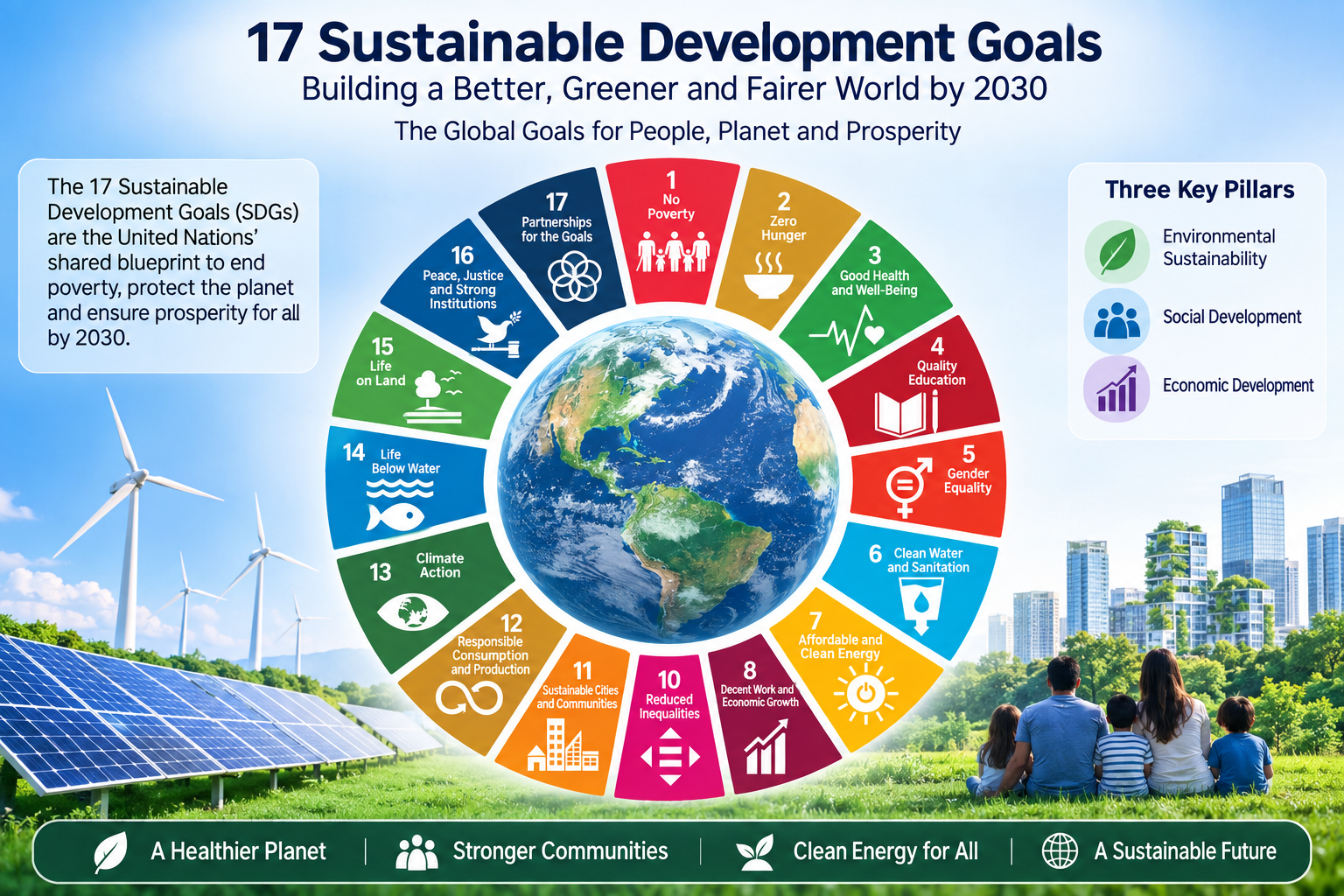
The 17 sustainable development goals are a global plan created by the United Nations to improve life for people everywhere while protecting the planet. They focus on ending poverty, improving health and education, promoting equality, expanding clean energy, creating decent jobs, protecting nature, and strengthening peace and cooperation.
These goals matter to every country, including the USA, the UK, European nations, and developing countries. Governments, businesses, schools, and communities use them as a roadmap for sustainable development.
In simple words, the 17 sustainable development goals are the world’s shared goals for building a healthier, fairer, and more sustainable future by the year 2030.
Table of Contents
- What Are the 17 Sustainable Development Goals?
- Why Were the SDGs Created?
- The 17 Sustainable Development Goals Explained
- How the Goals Work Together
- The Connection Between SDGs and Climate Change
- The Role of Renewable Energy in the SDGs
- Why Businesses Use the SDGs
- What Individuals Can Do
- Challenges in Achieving the Goals by 2030
- Progress So Far
- SDGs in the USA, UK, Europe, and Globally
- Common Misunderstandings About the SDGs
- Frequently Asked Questions
- Conclusion
What Are the 17 Sustainable Development Goals?
The 17 sustainable development goals are part of the 2030 Agenda for Sustainable Development, adopted by all United Nations member states in 2015. The goals provide a common framework for improving social well-being, economic development, and environmental protection.
The goals are universal. This means they apply to all countries, not only low-income nations. Every country is expected to work toward these goals according to its own priorities and circumstances.
The SDGs are based on three main pillars:
- Social development
- Economic development
- Environmental sustainability
The idea behind the SDGs is that people and the planet cannot thrive separately. Human well-being depends on healthy ecosystems, stable climates, and fair economic opportunities.
Why Were the SDGs Created?
The 17 sustainable development goals were created because world leaders realized that many global problems are connected and cannot be solved separately. Poverty, hunger, poor health, lack of education, unemployment, climate change, and environmental damage often affect the same families and communities at the same time.
Before the SDGs, countries followed the Millennium Development Goals from 2000 to 2015. Those goals helped improve health and education in many places, but they did not fully address climate change, clean energy, sustainable cities, responsible consumption, and biodiversity loss. As these challenges became more serious, the United Nations developed a broader plan that became the 17 sustainable development goals.
A simple real-world example shows why the goals were needed. Imagine a rural community where electricity is unreliable. Children may struggle to study after sunset, health clinics may not be able to store medicines safely, local businesses may earn less money, and families may depend on polluting fuels for cooking. Installing reliable solar power can improve education, health, income opportunities, and air quality at the same time. This is exactly the kind of interconnected progress that the 17 sustainable development goals are designed to encourage.
Another example is a city that invests in public transport, energy-efficient buildings, and green spaces. Residents can experience cleaner air, lower energy costs, less traffic congestion, better health, and reduced greenhouse gas emissions. One policy can therefore support several sustainable development goals together.
The 17 sustainable development goals were adopted by all United Nations member states in 2015 as part of the 2030 Agenda for Sustainable Development. Their purpose is to help countries create a future that is economically strong, socially fair, and environmentally sustainable while ensuring that no one is left behind.
The SDGs were created to address a wider range of challenges, including:
- Climate change
- Biodiversity loss
- Water scarcity
- Inequality
- Unsustainable consumption
- Weak institutions
- Lack of global cooperation
The SDGs recognize that these issues are connected. For example, climate change can increase poverty, reduce food production, damage health, and threaten water supplies.
The 17 Sustainable Development Goals Explained.
Goal 1: No Poverty
The first goal aims to end poverty in all its forms everywhere. Poverty includes not only low income but also lack of access to education, health care, housing, and basic services.
Important actions include social protection programs, economic opportunities, and support for vulnerable communities.
Goal 2: Zero Hunger
This goal seeks to end hunger, improve nutrition, and promote sustainable agriculture.
It supports:
- Nutritious food for all
- Sustainable farming
- Protection of small farmers
- Reduced food waste
- Climate-resilient agriculture
Food security is essential for health, education, and economic development.
Goal 3: Good Health and Well-Being
Goal 3 focuses on healthy lives and well-being for all people at all ages.
It includes maternal health, child health, infectious diseases, mental health, road safety, and access to health services.
Strong health systems are one of the foundations of sustainable development.
Goal 4: Quality Education
This goal aims to ensure inclusive and equitable quality education and lifelong learning opportunities for everyone.
Education helps people gain skills, improve employment opportunities, participate in society, and make informed decisions.
Digital skills and vocational training are increasingly important in modern economies.
Goal 5: Gender Equality
Goal 5 promotes equal rights and opportunities for women and girls.
Key areas include:
- Ending discrimination
- Preventing violence
- Equal participation in leadership
- Equal economic opportunities
- Access to education and health services
Gender equality benefits families, communities, and economies.
Goal 6: Clean Water and Sanitation
This goal aims to ensure safe water and sanitation for all.
It includes:
- Safe drinking water
- Toilets and sanitation facilities
- Hygiene
- Wastewater treatment
- Water conservation
- Protection of rivers and groundwater
Clean water is essential for health, agriculture, and ecosystems.
Goal 7: Affordable and Clean Energy
Goal 7 is one of the most important goals for sustainable technology. It seeks universal access to affordable, reliable, sustainable, and modern energy.
Key solutions include:
- Solar power
- Wind power
- Hydropower
- Geothermal energy
- Energy efficiency
- Clean cooking technologies
Clean energy reduces air pollution and greenhouse gas emissions while supporting economic growth.
Goal 8: Decent Work and Economic Growth
This goal promotes productive employment, entrepreneurship, innovation, and decent working conditions.
It encourages:
- Job creation
- Worker safety
- Fair wages
- Economic productivity
- Sustainable tourism
- Support for small businesses
Economic growth is most beneficial when it is inclusive and environmentally responsible.
Goal 9: Industry, Innovation and Infrastructure
Goal 9 focuses on resilient infrastructure, sustainable industrialization, and innovation.
Examples include:
- Clean manufacturing
- Research and development
- Digital infrastructure
- Sustainable transport
- Green technologies
Innovation is essential for solving environmental and social challenges.
Goal 10: Reduced Inequalities
This goal aims to reduce inequality within and among countries.
It promotes equal opportunities, social inclusion, fair economic policies, and protection against discrimination.
Reducing inequality can strengthen social stability and economic resilience.
Goal 11: Sustainable Cities and Communities
As more people live in cities, sustainable urban development becomes increasingly important.
Goal 11 supports:
- Affordable housing
- Public transport
- Clean air
- Green spaces
- Disaster resilience
- Efficient urban planning
- Sustainable buildings
Well-designed cities can improve quality of life while reducing environmental impacts.
Goal 12: Responsible Consumption and Production
Goal 12 encourages sustainable use of resources and reduction of waste.
It promotes:
- Resource efficiency
- Recycling
- Circular economy practices
- Sustainable products
- Reduced food waste
- Responsible business practices
This goal is closely linked to sustainable lifestyles.
Goal 13: Climate Action
Goal 13 calls for urgent action to combat climate change and its impacts.
Important actions include:
- Reducing emissions
- Expanding renewable energy
- Improving energy efficiency
- Climate adaptation
- Disaster preparedness
- Climate education
Climate action supports many other sustainable development goals.
Goal 14: Life Below Water
This goal aims to protect oceans and marine ecosystems.
Key priorities include reducing marine pollution, protecting coastal habitats, promoting sustainable fisheries, and addressing plastic pollution.
Healthy oceans are important for food security, climate regulation, and biodiversity.
Goal 15: Life on Land
Goal 15 focuses on forests, biodiversity, soils, wetlands, and other terrestrial ecosystems.
It seeks to:
- Protect forests
- Restore degraded land
- Prevent biodiversity loss
- Combat desertification
- Promote sustainable land management
Nature provides essential services such as clean air, water, and pollination.
Goal 16: Peace, Justice and Strong Institutions
Peaceful societies and trustworthy institutions are essential for sustainable development.
Goal 16 supports:
- Access to justice
- Reduced violence
- Transparency
- Accountability
- Human rights
- Effective public institutions
Without peace and good governance, progress on other goals becomes much more difficult.
Goal 17: Partnerships for the Goals
The final goal emphasizes cooperation among governments, businesses, researchers, communities, and international organizations.
Global challenges such as climate change and biodiversity loss cannot be solved by one country alone.

Partnerships help share knowledge, technology, finance, and best practices.
How the Goals Work Together?
The 17 sustainable development goals are deeply connected.
For example:
- Clean energy improves health by reducing air pollution.
- Quality education increases employment opportunities.
- Clean water supports food production and health.
- Climate action protects forests, agriculture, and communities.
- Sustainable cities can reduce emissions and improve well-being.
Policies that recognize these connections are often more effective than isolated actions.
The Connection Between SDGs and Climate Change.
Climate change affects nearly every SDG. Extreme heat, droughts, floods, storms, and sea-level rise can threaten food production, water supplies, health systems, infrastructure, and ecosystems.
Examples include:
- Drought affecting agriculture and hunger
- Heat waves affecting health
- Floods damaging homes and infrastructure
- Forest fires harming biodiversity
- Ocean warming affecting fisheries
Because of these links, climate action is often considered a central driver of sustainable development.
The Role of Renewable Energy in the SDGs.
Renewable energy is one of the clearest examples of sustainable development in practice.
Solar and wind energy can help:
- Reduce greenhouse gas emissions
- Improve air quality
- Create jobs
- Increase energy security
- Support rural development
- Lower long-term energy costs
Energy efficiency is equally important. Efficient buildings, appliances, and transport systems reduce energy demand and environmental impact.
For readers interested in sustainable technology, Goal 7 provides a practical framework for understanding why clean energy matters.
Why Businesses Use the SDGs?
Many companies use the SDGs to guide sustainability strategies and reporting.
Common business actions include:
- Using renewable electricity
- Improving energy efficiency
- Reducing waste
- Supporting diversity and inclusion
- Protecting worker health and safety
- Sourcing materials responsibly
- Investing in community projects
The SDGs help businesses identify environmental and social priorities and communicate them clearly to customers and investors.
What Individuals Can Do?
Individuals also play an important role in achieving the sustainable development goals.
Practical actions include:
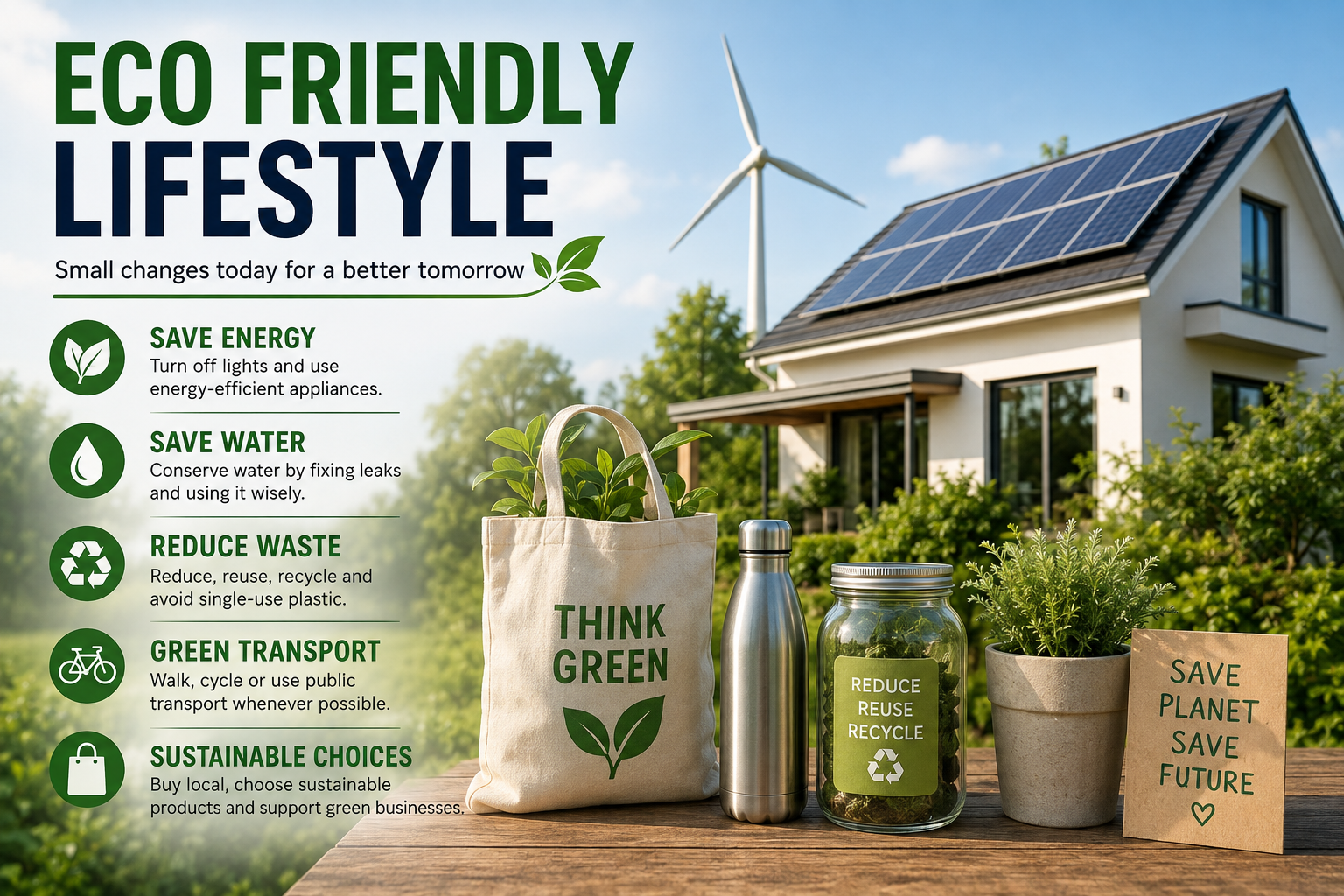
- Saving energy at home
- Choosing renewable electricity when available
- Using public transport, cycling, or walking
- Reducing food waste
- Recycling correctly
- Conserving water
- Buying durable products
- Supporting responsible companies
- Participating in local environmental projects
- Staying informed about sustainability issues
Small actions become powerful when adopted by millions of people.
Challenges in Achieving the Goals by 2030.
Achieving all 17 goals by 2030 is a major challenge.
Important obstacles include:
- Climate change impacts
- Biodiversity loss
- Economic inequality
- Political instability
- Armed conflicts
- Limited financial resources
- Unequal access to technology and infrastructure
- Slow policy implementation
These challenges show why stronger cooperation and investment are needed.
Progress So Far:
Since the 17 sustainable development goals were adopted in 2015, many countries have made progress in important areas such as access to electricity, renewable energy, education, clean water, and health services. Solar and wind energy have expanded rapidly in many parts of the world, helping more homes, schools, and businesses gain access to cleaner electricity.
A practical example can be seen in many rural communities where solar power has replaced diesel generators or kerosene lamps. Families can study at night, health centers can store medicines more safely, and small businesses can operate for longer hours. This kind of progress supports several 17 sustainable development goals at the same time, including clean energy, education, health, and economic growth.
However, progress has not been equal across all goals or all countries. Climate change, extreme weather events, conflicts, economic inequality, and the COVID-19 pandemic have slowed or reversed progress in some areas. For example, school closures affected learning outcomes, and many households faced income losses during the pandemic.
The United Nations regularly reviews global progress through its SDG reports, and recent assessments show that the world is not currently on track to achieve all 17 sustainable development goals by 2030. This does not mean the goals have failed; rather, it highlights the need for faster action, stronger policies, greater investment in clean energy and public services, and better international cooperation.
The overall picture is therefore mixed: meaningful progress has been made, especially in renewable energy and access to basic services, but much more work is needed to achieve the full vision of the 17 sustainable development goals by 2030.
SDGs in the USA, UK, Europe, and Globally.
United States:
The USA focuses on clean energy investment, infrastructure modernization, health, education, and climate policy, while continuing to address inequality and environmental challenges.
United Kingdom:
The UK emphasizes net-zero emissions, renewable energy, sustainable finance, and international development cooperation.
Europe:
European countries often integrate the SDGs into climate, circular economy, biodiversity, transport, and sustainable finance policies.
Global South:
Many developing countries prioritize poverty reduction, health services, education access, clean water, sanitation, and energy access while also facing climate vulnerability.
The same goals apply everywhere, but national priorities differ.
Common Misunderstandings About the SDGs
Many people have heard about the 17 sustainable development goals, but there are several common misunderstandings that can create confusion. Understanding what the SDGs really mean helps readers see why they are relevant to everyday life, business, education, and environmental protection.
1: The SDGs Are Only About the Environment.
This is one of the most common myths. The 17 sustainable development goals are not only about climate change or nature conservation. They also focus on poverty, health, education, jobs, equality, clean water, peace, and strong institutions. A country could reduce emissions, but if millions of people still lack health care or education, sustainable development would not be complete.
2: The SDGs Apply Only to Developing Countries.
The SDGs are universal. They apply to the USA, the UK, European countries, and developing nations alike. For example, a European city working to reduce air pollution and improve public transport is contributing to the 17 sustainable development goals just as much as a rural community improving access to clean water.
3: Only Governments Can Achieve the SDGs
Governments play a major role, but businesses, schools, universities, local communities, and individuals also contribute. A company that switches to renewable energy, a school that reduces waste, or a family that saves water and electricity is supporting several 17 sustainable development goals.
4: The Goals Are Separate From One Another
The SDGs are designed to work together. Imagine a town that installs solar-powered street lighting. The project can improve safety, reduce electricity costs, lower emissions, and create local jobs. One action can support clean energy, sustainable cities, economic growth, and climate action at the same time.
5: Sustainability Always Means Higher Costs
Many sustainable actions can actually save money over time. Energy-efficient appliances, better insulation, LED lighting, and solar power can reduce electricity bills. Businesses often find that reducing waste and using resources more efficiently lowers operating costs.
6: The SDGs Are Only Long-Term Goals
Although the target year is 2030, many SDG actions provide immediate benefits. Cleaner air can improve health today, better public transport can reduce traffic today, and energy-efficient homes can lower bills today. The 17 sustainable development goals are about improving life now while protecting the future.
7: Individual Actions Do Not Matter
Individual actions alone are not enough, but they are still important. When millions of people choose efficient appliances, reduce food waste, recycle correctly, or use public transport more often, the combined impact becomes significant.
Understanding these misunderstandings helps readers see that the 17 sustainable development goals are practical, relevant, and connected to everyday decisions, not just international policy discussions.

Frequently Asked Questions.
1.What are the 17 sustainable development goals in simple words?
They are 17 global goals created by the United Nations to end poverty, protect the planet, improve health and education, promote equality, and build a sustainable future by 2030.
2.Who created the sustainable development goals?
All United Nations member states adopted them in 2015.
3.Why are there 17 goals?
The number was agreed through international negotiations to cover the main social, economic, environmental, and governance challenges facing the world.
4.What is the deadline for the SDGs?
The target year is 2030.
5.Are the SDGs legally binding?
No. They are a voluntary international framework, although countries report their progress to the United Nations.
6.Which SDG is most related to renewable energy?
Goal 7: Affordable and Clean Energy.
7.How can students support the SDGs?
Students can learn about sustainability, reduce waste, save energy and water, and participate in community projects.
8.What is the difference between SDGs and ESG?
SDGs are global development goals created by the UN, while ESG is a framework used by companies and investors to evaluate environmental, social, and governance performance.
Conclusion:
The 17 sustainable development goals are the world’s most comprehensive framework for creating a better future. They recognize that human well-being, economic prosperity, and environmental protection are inseparable.
For readers interested in sustainable technology, the SDGs explain why renewable energy, energy efficiency, green innovation, circular economy practices, and climate action are so important. These goals are ambitious, and current progress is uneven, but they provide a valuable direction for governments, businesses, and individuals.
The most important lesson is that sustainability is not only about protecting nature. It is about ensuring that everyone has the opportunity to live a healthy, safe, prosperous, and dignified life while preserving the Earth’s resources for future generations.
If more people understand and support the 17 sustainable development goals, the chances of building a sustainable and resilient world by 2030 become much stronger.
About the Author:
I am not a professional expert in sustainable technology, renewable energy, climate science, or environmental policy. I regularly read information from trusted public sources such as government websites, research organizations, educational institutions, newspapers, technical reports, and other publicly available resources. The purpose of these articles is to collect practical information in simple language and present it in a way that helps readers understand sustainability-related topics more easily and make informed decisions in everyday life.
Recommended External Sources.
For readers who want to explore the 17 sustainable development goals in more detail, these official sources provide reliable and up-to-date information: