
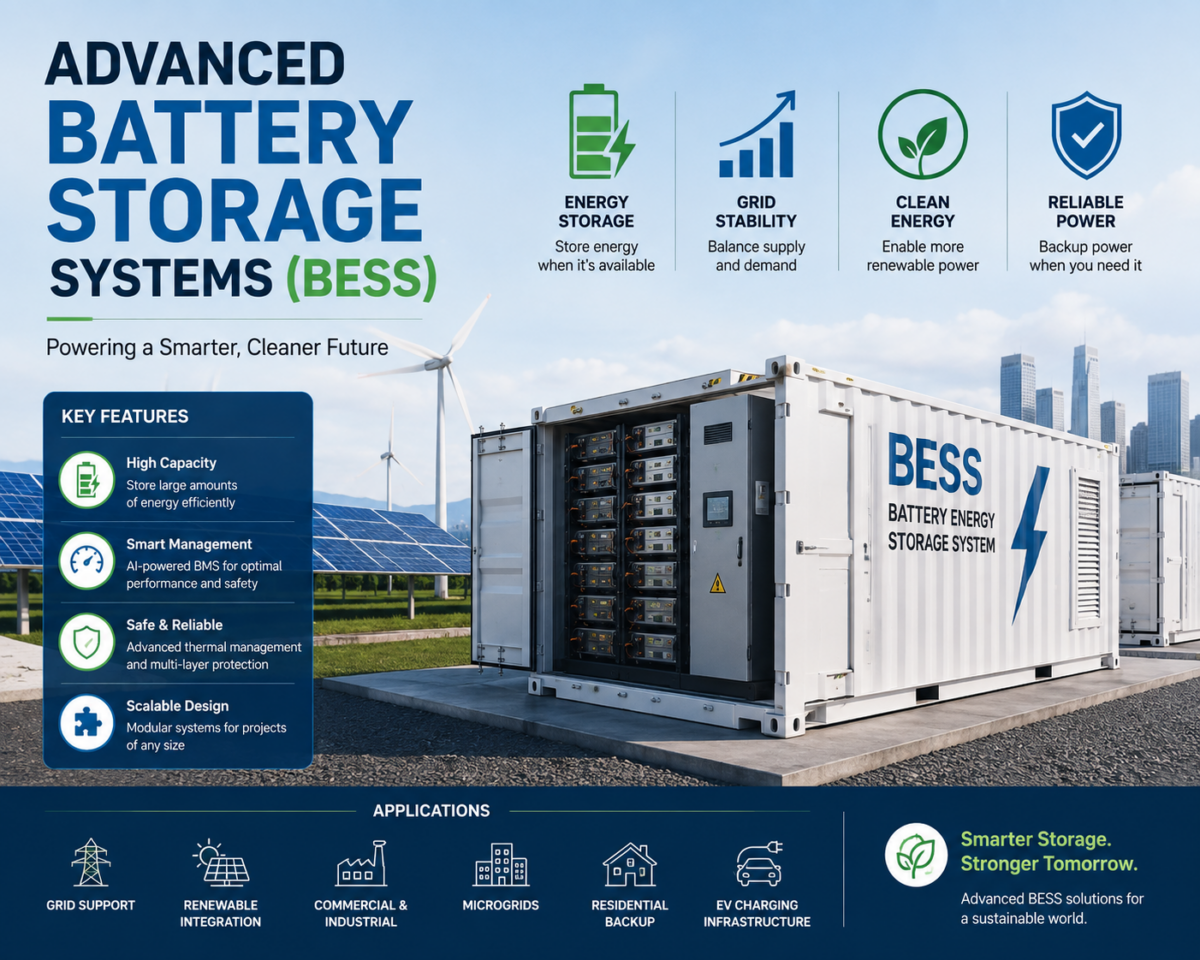
Advanced Battery Storage Systems (BESS)
As the U.S. energy grid becomes more dependent on solar and wind power, storing electricity at the right time is becoming just as important as generating it. Advanced Battery Storage Systems (BESS) help solve this challenge by storing excess electricity and releasing it when demand rises or renewable generation falls. For homeowners, businesses, utilities, and large-scale solar projects, BESS can improve energy reliability, reduce peak-demand costs, and provide backup power during outages. Modern systems are also becoming smarter, safer, and easier to integrate with renewable energy. From California’s solar-heavy grid to Texas’s growing battery market, energy storage is quickly becoming a practical part of America’s clean-energy future.
What Is Advanced Battery Storage Systems (BESS)?
Advanced Battery Storage Systems (BESS) are large-scale or distributed battery systems designed to store electricity and deliver it when it is needed. In simple terms, a BESS works like a rechargeable energy bank. It can charge when electricity is available or cheaper and discharge when demand increases or the grid needs additional power.
Most modern BESS projects use electrochemical energy storage, where electricity is converted into chemical energy inside battery cells during charging. When electricity is needed, that stored chemical energy is converted back into electrical power. Lithium-ion batteries are widely used in the U.S. market, while newer technologies are also being developed for longer-duration storage.
For the American power grid, one of the biggest benefits of Advanced Battery Storage Systems (BESS) is energy balancing. Solar panels may produce plenty of electricity during the afternoon but much less after sunset. A battery can store some of that daytime power and release it later, helping match electricity supply with changing demand.
BESS can also support grid stability, reduce peak demand, integrate renewable energy, and provide backup power during certain grid disruptions. The exact benefits depend on the battery technology, project size, location, and how the system is operated.
The 2026 U.S. BESS Market Boom.
The U.S. battery storage market is entering 2026 with strong momentum. According to the U.S. Energy Information Administration (EIA), utility-scale battery storage capacity reached 43.6 GW by the end of 2025, after averaging about 70% annual growth over the previous three years. During just the first six months of 2026, another 8.3 GW was added, pushing U.S. battery capacity to nearly 52 GW.
The pipeline is also impressive. EIA reports that developers plan to add around 24 GW of utility-scale battery storage in 2026, compared with 15 GW added in 2025. Texas, California, and Arizona account for roughly 80% of those planned additions.
Why is demand rising? Renewable energy is a major reason. Solar generation peaks during the day, while electricity demand often remains high after sunset. Advanced Battery Storage Systems (BESS) can store surplus electricity and release it when the grid needs it most.
Federal clean-energy incentives have also supported investment. Under the Clean Electricity Investment Credit (Section 48E), qualifying energy storage technology can receive a base 6% investment credit, with the potential to reach 30% when applicable requirements are met.
For U.S. utilities and developers, the value goes beyond tax incentives. BESS can help manage peak demand, integrate more renewable power, and improve grid flexibility. With electricity demand growing and grid reliability becoming a bigger concern, battery storage is moving from a niche technology to an important part of America’s power infrastructure.

Core Battery Chemistries Driving 2026.
The rapid growth of Advanced Battery Storage Systems (BESS) is not being driven by a single battery chemistry. Instead, the U.S. energy storage market is gradually moving toward technologies designed for different needs—short-duration grid balancing, lower-cost stationary storage, and longer-duration energy supply.
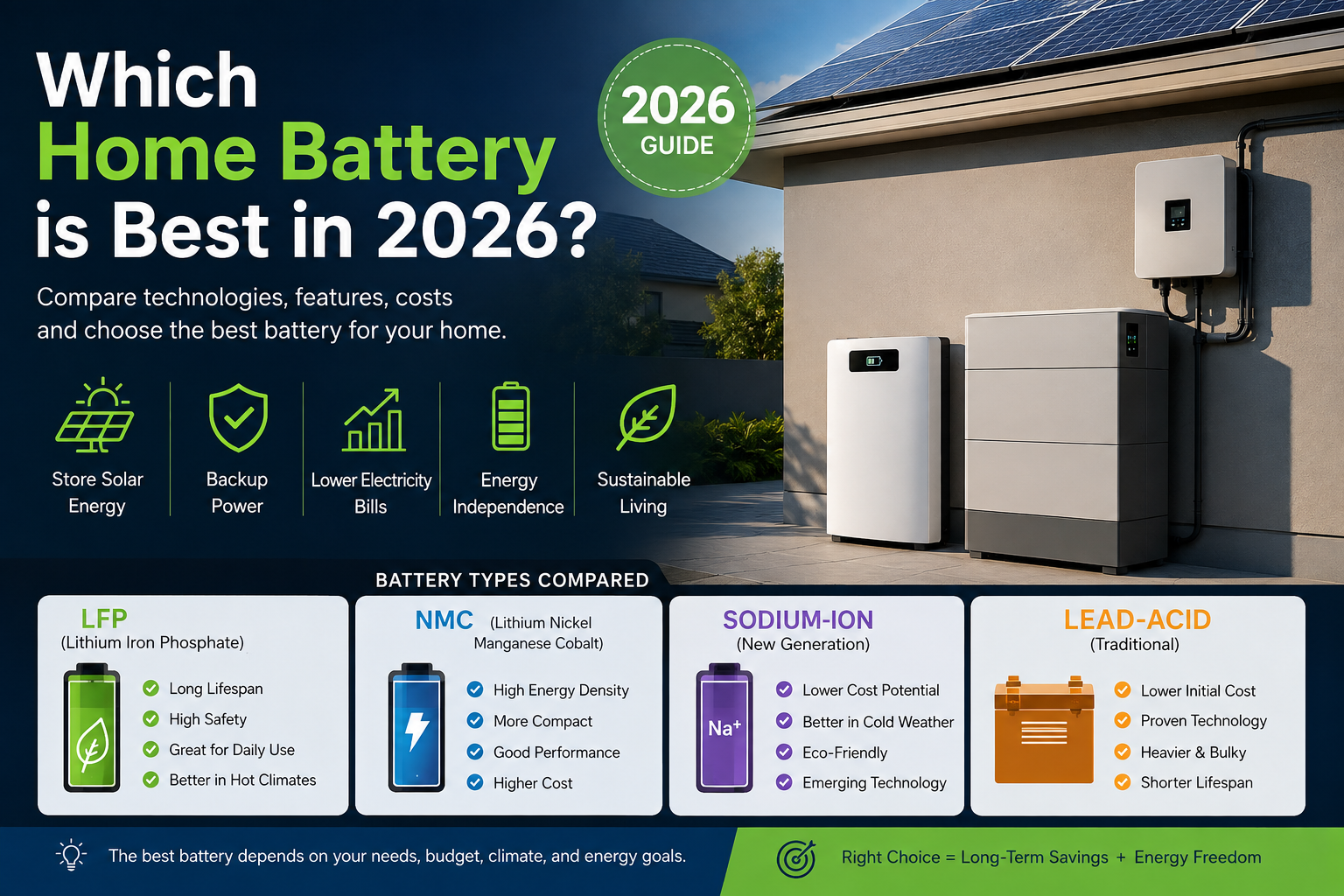
Lithium Iron Phosphate (LFP) vs. NMC:
For many stationary storage projects, LFP is becoming the preferred choice over traditional nickel manganese cobalt (NMC) chemistry. LFP generally offers stronger thermal stability and good cycle life, even though NMC can provide higher energy density. For a grid-scale battery that stays in one location, maximizing energy density is often less important than safety, durability, and predictable long-term operation. The growing shift of U.S. battery manufacturing toward LFP-based energy storage reflects this trend.
Sodium-Ion (Na-Ion) Batteries:
Sodium-ion batteries are emerging as a promising alternative for stationary storage. They use more abundant materials and may reduce dependence on lithium and certain critical minerals. However, in 2026, the technology is still in the early stages of large-scale commercialization in the United States rather than replacing lithium-ion overnight.
Solid-State & Flow Batteries:
For Long-Duration Energy Storage (LDES), researchers and developers are also exploring solid-state and flow battery technologies. Vanadium and iron-based flow batteries are particularly interesting because their energy capacity can be scaled separately from power output, making them suitable for applications requiring longer discharge periods. U.S. Department of Energy research continues to support both flow and next-generation sodium and solid-state technologies.
The key takeaway is simple: Advanced Battery Storage Systems (BESS) in 2026 are becoming more chemistry-diverse. LFP currently leads much of the mainstream stationary storage market, while sodium-ion, solid-state, and flow batteries are expanding the options for specialized and long-duration applications.
Key Technological Trends & Innovations.
The next phase of Advanced Battery Storage Systems (BESS) is not only about installing more batteries. Developers are also looking for ways to pack more energy into each system, operate batteries more intelligently, and connect distributed storage to the wider grid.
500Ah+ High-Capacity Cells:
Larger-format battery cells are becoming an important trend in utility-scale storage. High-capacity cells can reduce the number of individual cells, connections, and components needed inside a battery system. When combined into large containerized units, this can simplify system design and potentially lower installation and operating costs. The exact capacity and configuration, however, vary by manufacturer and project.
AI-Driven Battery Management Systems:
Battery management systems are becoming more sophisticated. Advanced software can monitor cell temperature, voltage, state of charge, and other operating conditions in real time. AI and machine-learning tools can help identify unusual behavior earlier, support predictive maintenance, and improve charging and discharging decisions. For battery operators, the goal is straightforward: get more useful performance from the same hardware while managing safety and degradation.
Virtual Power Plants & Grid Services:
Battery storage is also becoming more connected. Virtual Power Plants (VPPs) can coordinate many smaller batteries, solar systems, and other distributed energy resources through software. Instead of operating independently, these assets can respond collectively to grid needs such as peak-demand management, frequency support, and energy balancing.
This trend matters in the U.S. because battery deployment is expanding rapidly. EIA expects about 24 GW of new utility-scale battery storage capacity in 2026, with Texas, California, and Arizona accounting for most planned additions.
Real-World Applications & Use Cases in North America.
The value of Advanced Battery Storage Systems (BESS) becomes much clearer when you look at where batteries are actually being deployed. Across the U.S., storage is moving beyond solar farms and becoming part of data-center power strategies, utility planning, and commercial energy management.
Data Centers & AI Workload Backup:
AI data centers can place very large and rapidly changing loads on the electricity grid. BESS can provide fast-response backup power, help smooth short-term fluctuations, and support microgrid operations when grid conditions become difficult. The U.S. Department of Energy is actively examining battery storage and other technologies for data-center power and backup applications.
Gas Peaker Plant Replacement:
In states such as California, Texas, and New York, batteries are increasingly being considered for applications traditionally served by natural-gas peaker plants. A BESS can charge when electricity is plentiful and discharge during periods of high demand. This makes it particularly useful for handling short peak periods while also supporting renewable integration.
Commercial & Industrial Storage:
For factories, warehouses, hospitals, retailers, and other large electricity users, BESS can help manage peak demand and demand charges. Instead of drawing maximum power from the grid during expensive periods, a battery can discharge to reduce the facility’s grid demand. When paired with solar, the system can also store excess generation for later use.
These applications show why battery storage is becoming more than a backup technology. For many U.S. businesses and grid operators, it is becoming a flexible energy-management tool that can improve reliability, control costs, and make better use of renewable electricity.
Fire Safety, Regulations, & Sustainability.
As Advanced Battery Storage Systems (BESS) become larger and more common across the U.S., safety and end-of-life management are becoming just as important as battery performance. A well-designed storage project needs more than high-capacity cells—it also needs proper monitoring, cooling, fire protection, emergency planning, and responsible battery disposal.
Thermal Runaway Prevention:
One of the biggest safety concerns with lithium-ion batteries is thermal runaway, a chain reaction in which a damaged or overheated cell can rapidly increase in temperature and potentially trigger fire or hazardous gas release. Modern BESS projects use battery management systems, temperature and gas monitoring, ventilation, spacing, and other protection measures to detect problems early. Depending on the system design, liquid cooling can also help maintain controlled operating temperatures.
In the U.S., NFPA 855 is an important standard for the installation of stationary energy storage systems, while local fire codes, permitting requirements, and site-specific safety plans also play a major role. Safety should therefore be evaluated at the project level rather than treated as a one-size-fits-all checklist. The EPA notes that BESS incidents can create difficult challenges for firefighters and nearby communities, making planning and emergency response especially important.
Battery Recycling & Second-Life Use:
Sustainability does not end when a battery leaves service. Some EV batteries may still have enough usable capacity for stationary applications, such as storing excess solar electricity, before eventually being recycled. The EPA recognizes repair, reuse, and repurposing as potential pathways for used lithium-ion batteries.
When batteries can no longer be reused, recycling can recover valuable materials such as lithium, nickel, cobalt, and manganese. Proper recycling also reduces the risk of batteries entering household waste streams, where damaged lithium-ion batteries can cause fires.
For the U.S. BESS industry, the long-term goal is straightforward: safer storage systems, longer battery lifetimes, and a stronger circular battery supply chain.
Advanced Financial & Business Models for BESS
For U.S. developers and energy companies, Advanced Battery Storage Systems (BESS) are becoming more than an infrastructure investment. The bigger question is how a battery project can create reliable revenue over its operating life. In practice, the answer often depends on location, electricity prices, grid needs, and how the battery is operated.
Energy Arbitrage:
One common model is energy arbitrage. A battery charges when electricity prices are relatively low and discharges when prices rise. The difference can create revenue, although battery degradation, efficiency losses, market rules, and operating costs must be considered before estimating returns.
Capacity & Grid Services:
BESS projects can also earn money by providing grid services. Utilities and grid operators may compensate batteries for services such as frequency regulation, reserves, and capacity availability. These markets can be especially valuable because batteries can respond much faster than many traditional power resources.
Demand Charge Management:
For U.S. commercial and industrial customers, batteries can reduce electricity costs by lowering short periods of very high power demand. This approach is commonly called peak shaving. The financial benefit depends heavily on the customer’s utility tariff and demand-charge structure.
Solar + Storage Projects:
Pairing batteries with solar can create another business opportunity. Excess solar generation can be stored and used later, helping a project deliver electricity beyond the hours of peak solar production.
For investors, the strongest BESS projects usually combine several value streams rather than relying on a single source of revenue. Before investing, developers should model battery degradation, financing costs, tax incentives, interconnection expenses, and local electricity-market conditions.
Supply Chain Reliability & Domestic Manufacturing
As the U.S. adds more Advanced Battery Storage Systems (BESS), the reliability of the battery supply chain is becoming an important part of the energy-storage conversation. A battery project can have strong economics on paper, but delays in cells, inverters, transformers, or other key components can push construction schedules and increase costs.
Reducing Dependence on Overseas Supply:
The U.S. has historically relied heavily on overseas manufacturers for battery cells and critical materials. This creates exposure to shipping delays, trade restrictions, changing tariffs, geopolitical tensions, and fluctuations in raw-material prices. For developers, supply-chain diversification is therefore becoming a practical risk-management strategy rather than simply a policy goal.
Growth of U.S. Battery Manufacturing:
Federal policy has encouraged investment in domestic clean-energy and battery manufacturing. The Inflation Reduction Act (IRA) introduced incentives connected with domestic production and sourcing requirements, while the broader U.S. industrial policy has encouraged companies to build battery and component manufacturing capacity within North America.
New manufacturing facilities can strengthen the local supply chain by producing battery cells, modules, energy-storage systems, and related components closer to U.S. projects. This can potentially improve delivery times and create domestic jobs, although building a competitive battery supply chain still takes significant capital and access to critical minerals.
Why It Matters for BESS Projects?
For utilities, developers, and large commercial customers, supply-chain reliability directly affects project timelines and financial planning. A more diversified domestic and regional manufacturing base could reduce some external risks over time.
Still, U.S. battery storage is not completely independent of global supply chains. Critical minerals, processing capacity, and specialized components remain internationally connected. The realistic goal is greater resilience and diversification—not complete isolation from global markets.
Frequently Asked Questions About Advanced Battery Storage Systems (BESS)
1. What are Advanced Battery Storage Systems (BESS)?
Advanced Battery Storage Systems (BESS) are rechargeable energy storage systems that store electricity and supply it when needed. In the U.S., they are commonly used for renewable-energy integration, peak-demand management, backup power, and grid support.
2. How does a BESS work?
A BESS stores electricity inside battery cells as chemical energy. When power is required, an inverter converts the stored energy back into electricity that can be used by a home, business, or utility grid.
3. Why is battery storage important for the U.S. power grid?
Battery storage helps balance electricity supply and demand. For example, solar farms can produce significant power during the day, while electricity demand may remain high after sunset. Batteries can store some of that daytime generation and discharge it later.
4. Are BESS systems safe?
Modern systems include battery management, temperature monitoring, cooling, fire detection, and other safety measures. However, lithium-ion batteries can experience thermal runaway, so proper design, installation, maintenance, and emergency planning are essential.
5. What battery chemistry is most common in BESS?
Lithium iron phosphate (LFP) has become a major chemistry for stationary storage because of its combination of cycle life, thermal stability, and cost. Other technologies, including sodium-ion and flow batteries, are also being developed for specific applications.
6. Can BESS reduce electricity costs?
Yes. Commercial and industrial users can use batteries for peak shaving and demand-charge management, while utilities can use storage for energy shifting and other grid services. Actual savings depend on electricity rates, battery size, operating strategy, and local market conditions.
Conclusion
As the U.S. accelerates its transition toward clean energy, Advanced Battery Storage Systems (BESS) are shifting from an emerging technology to a foundational component of the nation’s grid infrastructure. Driven by federal incentives, rapid technological advancements in chemistries like LFP and Sodium-ion, and smart AI integration, battery storage is delivering unprecedented grid flexibility and reliability. For utilities, businesses, and developers, investing in modern energy storage is no longer just about backup power—it is a strategic imperative for navigating America’s energy future.
The U.S. government has also introduced policies aimed at strengthening domestic battery manufacturing and critical-mineral supply chains. The Advanced Manufacturing Production Credit is one example of federal support for qualifying battery and clean-energy manufacturing.
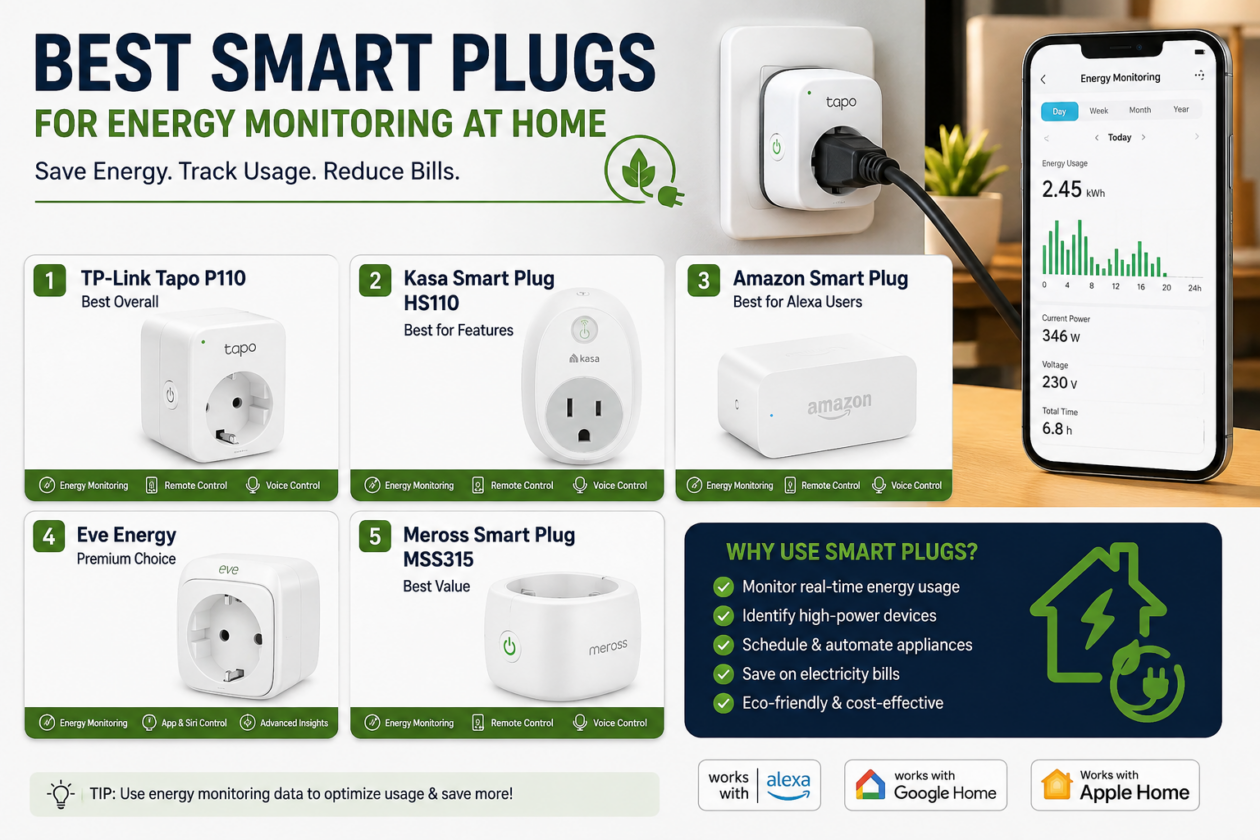
Best Smart Plugs for Energy Monitoring at Home

Eco friendly packaging ideas for clothing brand