
10 Best Plant-Based Eco-Friendly Products (2026): A Practical Guide for U.S. Households
Quick answer: The best plant-based eco-friendly products for most American households are concentrated laundry detergent, plant-based dish soap with refills, multi-surface cleaner tablets, reusable cloths, cellulose sponges, certified compostable food-scrap bags, bamboo bathroom basics, low-VOC paint, and peat-free potting mix. Each one either cuts trash, reduces harsh chemicals, or lowers your cost per use. Start with the items you replace most often.
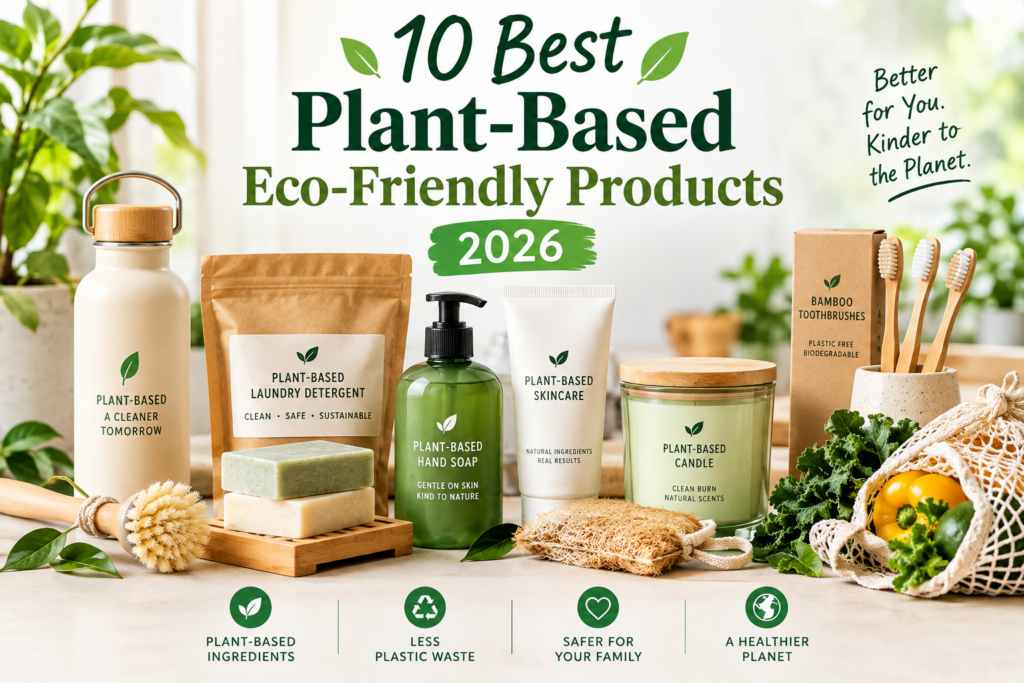
The 10 Best Plant-Based Eco-Friendly Products for 2026
| # | Product | Best For | Typical Price (USD) | Look For This Label |
|---|---|---|---|---|
| 1 | Concentrated plant-based laundry detergent | Families | $0.10–$0.30 per load | EPA Safer Choice |
| 2 | Plant-based dish soap + refill pouch | Everyone | $3–$7 per bottle | EPA Safer Choice |
| 3 | Multi-surface cleaner tablets | Renters, small spaces | $8–$20 starter kit | EPA Safer Choice |
| 4 | Reusable paper towel alternatives | Budget savers | $10–$25 for a set | GOTS, OEKO-TEX |
| 5 | Cellulose sponges and plant-fiber scrubbers | Kitchens | $4–$12 per pack | USDA BioPreferred |
| 6 | Certified compostable food-scrap bags | Homes with curbside or drop-off composting | $8–$15 per 50 bags | BPI Certified Compostable |
| 7 | Bamboo toothbrushes and shampoo bars | Bathrooms | $3–$5 each | FSC, USDA Organic (personal care) |
| 8 | FSC-certified bamboo toilet paper | Bulk buyers | $0.70–$1.20 per roll | FSC |
| 9 | Low-VOC, plant-based paint | Homeowners, renovators | $35–$65 per gallon | GREENGUARD Gold, Green Seal |
| 10 | Peat-free potting mix and OMRI-listed fertilizer | Gardeners | $8–$18 per bag | OMRI Listed |
Prices reflect typical U.S. retail ranges and shift by store, region, and sales. Always compare the per-use cost, not just the sticker price.
Why “Plant-Based” Doesn’t Automatically Mean “Better”
Let’s get one thing straight before the list.
“Plant-based” describes an ingredient source. It says nothing about safety, biodegradability, or carbon footprint. Poison ivy is plant-based, after all. A bamboo product shipped across an ocean in plastic packaging can have a bigger footprint than a well-made conventional alternative bought locally.
That’s why this list favors products with third-party verification and real household payoff. And it’s why it helps to know what U.S. regulators actually say about green marketing.
The FTC Green Guides (16 CFR Part 260) are federal guidance on environmental claims. They warn marketers against vague terms like “eco-friendly” or “green” with no backup. They also say a “biodegradable” claim generally needs solid evidence that the whole product will break down completely in a reasonably short time after normal disposal. That’s about one year in the FTC’s guidance, and a landfill typically doesn’t provide the right conditions.
So when a label says “natural” or “earth-friendly” and nothing else, treat it as a starting point for questions rather than proof.
1. Concentrated Plant-Based Laundry Detergent
Laundry is the easiest place to start. You do it weekly, and the jug is one of the bulkiest things in your recycling bin.
Concentrated formulas, whether sheets, powders, or small-bottle liquids, use less water and packaging per load. Many plant-derived options rely on surfactants made from coconut or palm kernel oil, plus enzymes to lift stains.
What to check:
- EPA Safer Choice label. The program reviews every ingredient in a product against human health and environmental criteria. It’s one of the more meaningful U.S. labels for cleaning products.
- Fragrance and dye disclosure. Some plant-based detergents still contain fragrance. If anyone in your house has sensitive skin, choose fragrance-free.
- Cold-water performance. Washing in cold water cuts the energy used to heat water. According to ENERGY STAR, most of a washer’s energy goes to heating water, so a cold-water-friendly detergent can lower your utility bill too.
Budget angle: A family running five loads a week at $0.20 per load spends about $52 a year on detergent. Some conventional bargain brands land at $0.12–$0.15 per load, so honest math says eco options aren’t always cheaper. The savings show up when you buy concentrates in bulk or subscribe.
Good fit for: Families, renters with shared laundry rooms (sheets are light to carry), and anyone tired of hauling a 92-ounce jug up the stairs.
2. Plant-Based Dish Soap With a Refill Pouch
Dish soap is mostly water in many conventional bottles. A refill system fixes that.
Buy one durable pump bottle, then refill it from a pouch or concentrate. Over a year, a two-adult household might swap out six to eight plastic bottles for two or three pouches.
Look for plant-derived surfactants and the Safer Choice label. Also check that the soap still cuts grease at low water temperatures, because you’ll be hand-washing greasy pans, not just plates.
Practical tip: If your dishwasher is newer, it likely carries the ENERGY STAR label and uses far less water than hand-washing a full load. Use the dishwasher when you can and reserve hand soap for pots, cast iron, and wooden utensils.
Good fit for: Every kitchen. It’s a small purchase that pays back in fewer bottles.
3. Multi-Surface Cleaner Tablets
Cleaner tablets dissolve in water inside a reusable spray bottle. You skip shipping water in plastic bottles, which lowers packaging weight and cost.
A starter kit usually runs $8–$20, and refills cost about $1–$2 per bottle’s worth of cleaner. Typical plant-derived ingredients include citric acid, coconut-based surfactants, and essential oils.
Cautions worth knowing:
- “Plant-based” doesn’t mean you can mix products. Never combine cleaners, especially anything with bleach or ammonia. Health and safety agencies, including the EPA, warn about toxic gas from mixing household chemicals.
- Essential oils can irritate pets and people. Cats in particular can be sensitive to certain oils, so read labels and ventilate.
- Some tablets are designed for general cleaning, not disinfecting. If you need to kill germs, check the EPA’s list of registered disinfectants rather than assuming a plant-based cleaner does it.
Good fit for: Renters and small apartments where storage is tight. A few tablets take up almost no cabinet space.
4. Reusable Paper Towel Alternatives
The average American household goes through a lot of paper towels. Swapping even half of that use for cloth changes your trash output and your grocery bill.
Options include cotton or bamboo-blend cloths, Swedish-style dishcloths (cellulose and cotton), and plain old flour-sack towels. A set of 10–20 cloths costs $10–$25 and lasts for hundreds of washes.
What to look for:
- GOTS (Global Organic Textile Standard) for organic cotton items.
- OEKO-TEX Standard 100 for tested textile safety.
- Tight weave and quick drying, so cloths don’t sour.
The honest math: If your family spends $3 a week on paper towels, that’s about $156 a year. A $20 cloth set that replaces two-thirds of them saves you around $100 in the first year, and more after that. You’ll add a bit of laundry, so wash cloths with your regular loads instead of running special ones.
Keep paper towels for: Raw meat spills, grease, and pet accidents. No one is handing out medals for heroic cloth use.
Good fit for: Budget-minded families and anyone who wants a fast way to shrink the kitchen trash bag.
5. Cellulose Sponges and Plant-Fiber Scrubbers
Most conventional kitchen sponges are made of polyurethane foam, a petroleum-based plastic. Cellulose sponges use wood pulp instead. Scrub brushes with wooden handles and plant-fiber bristles (agave, coconut, or palm) round out the set.
Check the USDA BioPreferred program. Products carrying the USDA Certified Biobased Product label show the percentage of renewable biological ingredients, which gives you an actual number rather than a marketing claim.
Real-world notes:
- Any sponge can harbor bacteria. Rinse after use, let it dry, and replace it every one to two weeks.
- Some “compostable” sponges are only compostable in industrial facilities. Read the fine print, and don’t toss them in a backyard pile unless the maker says that’s fine.
- A wooden dish brush with replaceable heads lasts longer than a sponge and costs less over time.
Good fit for: Anyone who replaces sponges often, which is nearly everyone.
6. Certified Compostable Food-Scrap Bags
Here’s where the numbers get interesting. According to the EPA’s food waste data (2018), food was the single largest material category going into U.S. landfills, at roughly 24 percent of landfilled municipal solid waste. Food rotting in a landfill produces methane, a potent greenhouse gas.
If your city offers curbside food-scrap pickup or a drop-off program, compostable bags make the kitchen side of that habit cleaner.
What matters here:
- BPI Certified Compostable. The Biodegradable Products Institute certifies products against ASTM D6400 (or D6868 for coated paper) standards. If a bag lacks this logo, be skeptical.
- Your local program’s rules. Some composters accept certified compostable bags. Others don’t. Call or check your city’s website first. San Francisco, Seattle, and parts of the Northeast are well set up for this. Many places aren’t.
- Home compost differs from industrial compost. Most BPI-certified bags need the high heat of an industrial facility. Look for a “home compostable” certification if you plan to use a backyard bin.
Skip these if: You don’t have access to composting. A compostable bag headed for a landfill doesn’t break down in any useful way. In that case, a freezer bag for scraps and a drop-off trip works better, or just use a countertop bin and rinse it.
Good fit for: Homes with compost access. Pricing runs about $8–$15 for 50 small bags.
7. Bamboo Toothbrushes and Shampoo Bars
Two bathroom swaps that show up on nearly every list, so here’s the honest version.
Bamboo toothbrushes: The handle is plant-based and compostable, but most brushes still have nylon bristles. Remove the bristles with pliers before composting the handle, and toss the bristles in the trash. It’s still a plastic-reduction step, since the handle is where most of the plastic used to be. Expect $3–$5 per brush. The American Dental Association recommends replacing your toothbrush every three to four months, so you’ll go through several a year regardless of material. Look for soft bristles and the ADA Seal of Acceptance if that matters to you.
Shampoo bars: Solid bars replace plastic bottles and last roughly as long as two or three bottles of liquid. Prices run $8–$15 per bar. Hard water can leave hair feeling waxy, so if your area has it, a rinse with diluted apple cider vinegar or a bar formulated for hard water may help.
On labels: Personal care products can carry the USDA Organic seal if they meet organic agricultural ingredient standards, but the seal is uncommon on shampoo. “Organic” in small print on the front isn’t the same thing. Verify with the seal itself.
Good fit for: Renters, travelers, and families trying to trim bathroom trash.
8. FSC-Certified Bamboo Toilet Paper
This one gets mixed reactions, and that’s fair.
Bamboo grows fast and regenerates from its roots, so it’s a renewable option compared with pulping trees. Some brands sell bamboo or bamboo-blend toilet paper in plastic-free, paper-wrapped packaging, often by subscription.
What to weigh:
- FSC (Forest Stewardship Council) certification means the fiber comes from responsibly managed sources. Without it, you can’t be sure where the bamboo was grown or how.
- Shipping distance. Most bamboo is grown in Asia. Recycled-fiber toilet paper made in the U.S. can have a smaller transport footprint. Neither choice is perfect.
- Price. Bamboo runs about $0.70–$1.20 per roll, higher than store-brand options at $0.40–$0.70.
Bottom line: If you like bulk delivery and plastic-free packaging, bamboo works. If you’d rather buy locally, recycled paper carrying an FSC Recycled label is a solid, often cheaper alternative.
Good fit for: Households who value packaging reduction and don’t mind paying a little more.
9. Low-VOC, Plant-Based Paint
Homeowners and renters with landlord permission get real benefit here.
Conventional paints can release volatile organic compounds (VOCs) as they dry. The EPA notes that indoor air can carry higher concentrations of many pollutants than outdoor air, and VOCs from paints and finishes are one contributor. Low-VOC and zero-VOC paints reduce that off-gassing. Some “plant-based” formulas replace part of the petroleum-based binder with plant oils, clay, or minerals.
What to look for:
- GREENGUARD Gold, a UL certification for low chemical emissions, widely used for products in schools and healthcare settings.
- Green Seal standards (GS-11 for paint).
- Actual VOC numbers on the can, in grams per liter. Under 50 g/L is generally considered low.
Caveats:
- “Zero-VOC” paint can still contain small amounts once colorants are added. Ask your paint counter about the finished color.
- Ventilate anyway. Open windows and run a fan while painting and for a day or two afterward.
- Pregnant women, infants, and people with asthma should check with a doctor and choose products carefully.
Cost: Expect $35–$65 per gallon, compared with $25–$50 for mid-range conventional paint. A typical bedroom (about 12 × 12 feet) takes roughly one gallon per coat.
Good fit for: Nurseries, bedrooms, and any renovation where you’ll be sleeping in the room soon.
10. Peat-Free Potting Mix and OMRI-Listed Fertilizer
Gardeners get a turn.
Peat moss is harvested from bogs that store large amounts of carbon and take centuries to regrow. Peat-free mixes use coconut coir, composted bark, or compost instead. They’re increasingly easy to find at U.S. garden centers.
For fertilizer, the OMRI (Organic Materials Review Institute) Listed seal means a product is allowed for use in certified organic production under USDA organic rules. Plant-based options include alfalfa meal, kelp, cottonseed meal, and finished compost.
Practical notes:
- Coir-based mixes hold water differently than peat. You may need to adjust watering, especially for container plants in summer heat above 85°F.
- Organic fertilizers release nutrients slowly. They won’t give you a sudden green-up, but they build soil over time.
- Start seeds in a fine seed-starting mix, not straight compost.
Cost: A 1-cubic-foot bag runs $8–$18. Making your own compost from kitchen scraps and yard waste is the cheapest option, and the EPA’s home composting guide walks you through it step by step.
Good fit for: Homeowners with beds, container gardens, or a few tomato plants on the patio.
Quick Decision Framework: Where Should You Start?
Ask yourself three questions.
- What do we throw away most? If it’s plastic bottles, start with refills and concentrates (items 1–3). If it’s paper, start with cloths (item 4). If it’s food, start with composting (item 6).
- What do we replace most often? Sponges, toothbrushes, and dish soap are cheap, frequent swaps that build the habit.
- What touches our air or skin most? Paint and cleaners deserve the most scrutiny, because you breathe and touch them daily.
Rule of thumb: Pick one item this month. Get it working. Then add another.
Renter, Family, or Homeowner: What to Buy First
| If You Are… | Start With | Then Add | Skip For Now |
|---|---|---|---|
| A renter | Cleaner tablets, reusable cloths, laundry sheets | Shampoo bars, cellulose sponges | Paint, potting mix |
| A family with kids | Concentrated laundry detergent, dish soap refills, cloths | Compostable bags, bamboo toothbrushes | Bamboo toilet paper if budget is tight |
| A homeowner | Low-VOC paint (when renovating), peat-free potting mix | Compost setup, plant-fiber scrubbers | Anything your local waste system can’t handle |
How Much Can You Actually Save?
Numbers vary by household, so treat these as ballpark figures for a family of four.
| Swap | Estimated Annual Change |
|---|---|
| Reusable cloths replacing about 2/3 of paper towels | Save roughly $75–$125 |
| Bulk concentrated laundry detergent | Save $0–$25 (varies) |
| Dish soap refill pouches | Save $10–$25 |
| Cleaner tablets vs. bottled cleaners | Save $15–$40 |
| Plant-fiber brush vs. frequent sponge replacement | Save $5–$15 |
| Bamboo toilet paper vs. store brand | Costs $30–$100 more |
| Low-VOC paint | Costs $10–$30 more per gallon |
That’s a mixed picture, and it should be. Some eco swaps save money. Others cost more, and you’re paying for packaging reduction or lower emissions. Choose which trade-offs matter to you.
How to Spot Greenwashing in Five Minutes
Marketing teams know shoppers want green products. Here’s a fast checklist.
- Vague words. “Eco-friendly,” “green,” and “natural” with no explanation are red flags under the FTC Green Guides.
- No third-party seal. Look for named certifications like EPA Safer Choice, USDA Organic, USDA BioPreferred, BPI, FSC, OMRI, GREENGUARD, or Certified B Corporation. Then confirm the seal is real by searching the certifier’s website.
- Imagery over information. Leaves and earth tones on a package prove nothing.
- Unsupported percentages. “50% plant-based” of what? Ingredients, packaging, or the bottle cap?
- Biodegradable without conditions. Ask where and how fast.
- B Corp confusion. Certified B Corporation status evaluates a whole company’s social and environmental performance. It doesn’t certify a single product’s ingredients.
If you can’t find the details in two minutes, the brand probably isn’t eager to share them.
Common Questions
Are plant-based cleaning products as effective as conventional ones?
Many are, for everyday cleaning. For heavy grease, hard mineral buildup, or disinfecting, results vary. Check EPA-registered disinfectants if you need germ-killing claims.
Is “plant-based” the same as “non-toxic”?
No. Some plant-derived ingredients, including certain essential oils, can irritate skin or harm pets. Read the ingredient list.
What does EPA Safer Choice mean?
It means the EPA reviewed the product’s ingredients against criteria for human health and environmental effects. It’s a strong starting signal for household cleaners. Details here.
Are bamboo products really sustainable?
Bamboo grows quickly, but sustainability depends on how it’s harvested, processed, and shipped. FSC certification helps. Local, recycled, or reusable options can still beat bamboo in some cases.
Can I put compostable bags in my backyard compost?
Only if they’re certified home compostable. Most BPI-certified items need industrial composting.
What should I buy first if my budget is tight?
Reusable cloths and a refillable dish soap system. They cost little and pay back fast.
The Bottom Line
You don’t need to overhaul your house in a weekend. The strongest picks on this list, concentrated cleaners, reusable cloths, refills, and certified compostable bags where composting exists, share a simple trait: they cut waste you can see in your trash can and your budget.
Choose products with verifiable labels, be skeptical of vague claims, and remember that using something up beats buying something new and perfect. Start with one swap this week. Next month, add another.
Final Thoughts: Smart Swaps Beat Perfect Ones
You don’t need to overhaul your entire home. Pick two or three products from this list, try them for a month, and see what sticks.
The best eco-friendly product is the one you’ll actually keep using, that fits your local waste system, and that doesn’t blow your budget. Certifications help. Concentrates and reusables save money. And a healthy dose of skepticism about big green claims will protect both your wallet and the planet.
If you take one thing from this guide, make it this: check the label for a real certification, compare cost per use, and match the product to how you actually dispose of waste. That’s how you find the 10 best plant-based eco-friendly products for 2026, and for your own household.
Explore More Eco-Friendly Living Guides
If you enjoyed this guide on non-toxic home care, check out our top-rated sustainable lifestyle articles to complete your eco-friendly journey:
 10 Best Eco-Conscious Clothing Brands in 2026 — Discover ethical fashion brands that prioritize sustainable fabrics and fair trade practices.
- Sustainable Fashion 2026: The Ultimate Guide to Eco-Friendly Style — Learn how to build a timeless capsule wardrobe without compromising on ethics or quality.
10 Best Plastic Free Laundry Detergents in US
—Best Safe Choices for Your Home


Disclaimer: Prices are approximate and vary by retailer, brand, and region. Always follow product label instructions, and consult local waste authorities for composting and disposal rules. This article is for general informational purposes.