
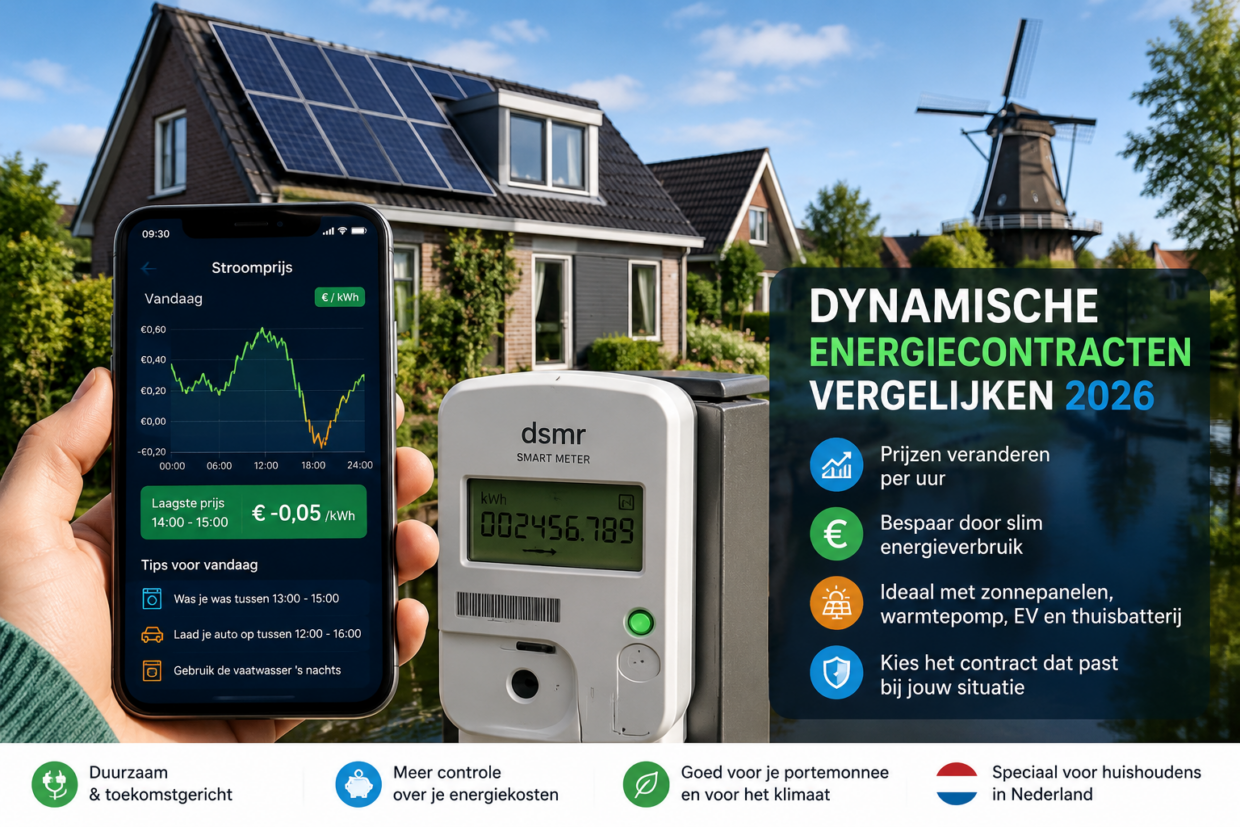
Dynamische energiecontracten vergelijken 2026: Hoe kies je het beste contract?
Updated: August 16, 2026
note: Dit artikel is in het Engels geschreven om zowel de lokale bevolking als expats in Nederland te helpen.
Choosing an energy contract in the Netherlands is becoming more complicated. Energy prices can change frequently, the Dutch salderingsregeling will end on January 1, 2027, and households with solar panels need to pay more attention to when they use and export electricity.
If you are searching for Dynamische energiecontracten vergelijken 2026, the most important point is this: there is no single dynamic contract that is automatically the cheapest or best for every household. A dynamic contract can work well if you can shift electricity use to cheaper periods, but it also exposes you to changing market prices.
In 2026, comparing these contracts is becoming easier because most suppliers and comparison services are using the same expected energy prices. However, those future prices are still estimates, not guarantees.
The right choice depends on your electricity and gas use, solar panels, flexibility, fixed supplier costs, markups, export conditions, and how comfortable you are with price changes.
Table of Contents:
- Quick Answer: Are Dynamische energiecontracten vergelijken 2026?
- What Is a Dynamic Energy Contract?
- How Do Dynamic Energy Prices Work in the Netherlands?
- Why Compare Dynamic Energy Contracts in 2026?
- What Should You Compare?
- What Is the Beste Dynamische Energiecontract 2026?
- Dynamic vs Fixed vs Variable Energy Contracts
- Are Dynamic Contracts Good With Solar Panels?
- How to Save Money With a Dynamic Contract
- Advantages and Disadvantages
- Who Should Choose a Dynamic Contract?
- A Practical Comparison Checklist
- Frequently Asked Questions
- Conclusion
Quick Answer: Are Dynamische energiecontracten vergelijken 2026?
A dynamic energy contract can be a good option in 2026 if you are comfortable with changing prices and can move some electricity consumption to cheaper periods.
With a dynamic contract, the electricity price changes frequently according to the wholesale market. Depending on the contract, electricity can be priced per hour or per quarter, while gas prices normally change daily. A slimme meter is required because your actual consumption needs to be measured.
The main advantage is flexibility. You may benefit when wholesale electricity prices are low, especially if you can run appliances, charge an EV, or use a heat pump during cheaper periods.
The main disadvantage is uncertainty. When market prices rise, your energy costs can rise as well. The Dutch regulator ACM specifically warns consumers that future dynamic prices cannot be predicted.
So, when Dynamische energiecontracten vergelijken 2026, do not simply choose the supplier showing the lowest estimated monthly payment. Look at the complete price structure and your own energy habits.
What Is a Dynamic Energy Contract?
A dynamic energy contract is an energy agreement where the variable energy price follows the wholesale market rather than staying fixed for a long period.
For electricity, the price can change every hour or every quarter, depending on the supplier and contract. For gas, the price normally changes once per day. ACM describes dynamic contracts as agreements where the delivery price changes frequently and is linked to market prices.
This is different from a traditional fixed contract.
With a fixed contract, you normally agree on a fixed delivery price for a specific period. With a variable contract, the supplier can change the price periodically according to the contract conditions.
With a dynamic contract, your actual energy cost follows the market much more closely.
A simple example:
Imagine that electricity is cheaper during a particular afternoon because there is strong solar generation and relatively low demand.
If your dynamic contract reflects that lower market price, using electricity during that period could be cheaper than using the same amount during an expensive period.
This creates an opportunity for verbruik sturen, meaning changing when you consume electricity.
For example, you could potentially:
- Run the washing machine when prices are lower.
- Charge an electric car during cheaper periods.
- Schedule a dishwasher overnight or during a low-price period.
- Adjust a smart heat pump when practical.
- Use a home battery to shift electricity consumption.
However, the exact saving depends on your contract, household, consumption pattern, and actual market prices.
How Do Dynamic Energy Prices Work in the Netherlands?
The wholesale electricity market is an important part of a dynamic contract.
Electricity suppliers purchase energy through wholesale markets. The market price can move because of supply, demand, weather, renewable generation, fuel prices, and other market conditions.
The consumer does not simply pay the wholesale price alone. Your final bill can also contain supplier charges, network costs, taxes, and VAT.
This is why comparing only the advertised market price can be misleading.
What can be included in your bill?
A dynamic energy bill can contain:
| Cost component | What it means |
|---|---|
| Market energy price | The underlying wholesale electricity or gas price |
| Supplier markup | A fee added by the energy supplier |
| Fixed supply costs | A fixed amount charged by the supplier |
| Network charges | Costs associated with the electricity or gas network |
| Energy tax | Dutch government energy taxation |
| VAT | Tax applied to the energy bill |
| Solar export costs | Charges that may apply when you feed electricity back into the grid |
ACM states that suppliers determine their delivery charges, while consumers also pay network costs and taxes.
This is one reason dynamische energiecontracten vergelijken 2026 should be based on the total expected cost rather than a single kWh figure.
Why Compare Dynamic Energy Contracts in 2026?
There is an important development in the Dutch energy market this year.
The Consumentenbond reported in July 2026 that dynamic energy contracts had become easier to compare because most energy suppliers and comparison services were moving toward the same expected energy prices. Previously, different assumptions about future prices could make one supplier appear cheaper than another even when the underlying market price was the same.
This is useful for consumers.
However, there is an important limitation: expected energy prices are still estimates.
Nobody can know the exact electricity or gas price for every future hour or day.
That means a comparison showing an estimated annual cost should not be treated as a guaranteed bill.
What actually differs between suppliers?
The underlying market price is broadly linked to the same market, but suppliers can differ in areas such as:
- Supplier markup or inkoopvergoeding
- Fixed monthly or annual charges
- Gas and electricity pricing structures
- Solar export arrangements
- Export fees
- Discounts or promotional offers
- Billing methods
- Apps and energy-management tools
- Smart home and battery integrations
- Customer service
- Contract conditions
ANWB also explains that dynamic suppliers can have different purchasing costs and other contract characteristics even though they purchase energy from the same wholesale market.
What Should You Compare?
When looking for a dynamic energy contract, use a broader checklist than simply searching for the cheapest advertised price.
1. Electricity markup:
Check how much the supplier adds to the underlying electricity market price.
A small difference per kWh can become meaningful if your household uses a lot of electricity.
This is particularly relevant for households with:
- An electric vehicle
- A heat pump
- Electric heating
- A home battery
- High electricity consumption
2. Gas markup:
If you still use natural gas, check the supplier’s additional charge per cubic metre.
A household with high gas consumption may care more about the gas pricing structure than a low-gas household.
3. Fixed supplier charges:
Look at the fixed vaste leveringskosten.
A contract with a low markup does not necessarily produce the lowest total bill if its fixed charges are higher.
4. Solar panel conditions:
If you have solar panels, this becomes especially important.
Check:
- What you receive for exported electricity.
- Whether export fees apply.
- How exported electricity is calculated.
- How the supplier handles solar generation.
- What changes when the salderingsregeling ends.
5. Discounts:
A welcome bonus can make one offer look attractive in a comparison.
But do not evaluate the contract only on the first-year discount.
Ask yourself what the underlying cost structure looks like after the promotion ends.
6. App and energy management:
Some dynamic suppliers provide apps that show future electricity prices.
This can be useful if you want to practice slim energieverbruik.
For a household with an EV or battery, automation features may be more valuable than a small difference in supplier fees.
What Is the Beste Dynamische Energiecontract 2026?
There is no universal answer to the question beste dynamische energiecontract 2026.
The best option depends on your situation.
For example:
Household A:
Uses little electricity, has no EV, no battery, and wants predictable bills.
A dynamic contract may not be the obvious choice.
Household B:
Has an EV, heat pump and smart appliances and can shift electricity use.
A dynamic contract may be more interesting because the household can respond to market prices.
Household C:
Has many solar panels and exports a large amount of electricity.
Here, the supplier’s solar export conditions can become extremely important.
This is why a simple ranking of “best” suppliers can be misleading.
That is a much more useful comparison.
Current comparison pages in the Netherlands show that suppliers can differ in markups, fixed costs, discounts and solar-related conditions.
Because these offers can change, a supplier that looks cheapest in August 2026 may not remain cheapest later in the year.
Dynamic vs Fixed vs Variable Energy Contracts.
Before switching, understand the three main contract types.
| Feature | Dynamic | Variable | Fixed |
|---|---|---|---|
| Electricity price | Changes frequently | Changes periodically | Fixed for agreed period |
| Gas price | Usually changes daily | Changes periodically | Fixed for agreed period |
| Price certainty | Low | Medium | High |
| Can benefit from low market prices | Yes | Indirectly | No immediate benefit |
| Risk from market price increases | Higher | Medium | Lower during fixed period |
| Requires flexible consumption | Often helpful | Less important | Not necessary |
| Suitable for | Flexible households | People wanting some flexibility | People prioritising certainty |
ACM explains that fixed contracts have a fixed delivery price for their agreed period, while variable and dynamic contracts allow prices to change.
The right choice is therefore not purely about price.
It is also about risk tolerance.
If a higher winter energy bill would create financial stress, a dynamic contract may not be comfortable even if it could offer savings during cheaper periods.
Are Dynamic Contracts Good With Solar Panels?
This is one of the most important questions for Dutch households in 2026.
The answer is: it depends on how much electricity you generate, use directly and export.
The Dutch salderingsregeling will end on January 1, 2027. Until December 31, 2026, households can still offset eligible solar electricity exported to the grid against electricity consumption under the existing scheme. From 2027, this net-metering benefit ends, although households will continue to receive compensation for electricity they feed into the grid.
This change makes self-consumption more important.
Why timing matters?
Solar panels usually generate the most electricity during daylight hours.
At the same time, many households use more electricity in the morning and evening.
That can create a mismatch between generation and consumption.
A dynamic contract may make electricity prices especially relevant during these periods.
For example, a household could potentially increase direct use of solar electricity by:
- Running appliances during sunny periods.
- Charging an EV when solar generation is available.
- Using a smart energy-management system.
- Charging a home battery when appropriate.
- Reducing unnecessary electricity exports.
The goal is not simply to produce more electricity.
It is to use more of your own electricity when doing so makes financial and practical sense.
Important limitation:
A home battery is not automatically profitable just because you have a dynamic contract.
Battery economics depend on purchase price, usable capacity, efficiency, electricity prices, cycling, installation, warranty, and how the system is operated.
Do not assume that every battery will produce a financial return.
How to Save Money With a Dynamic Contract.
A dynamic contract works best when you understand your own energieverbruik.
1. Look at your hourly consumption.
If you have a smart meter, examine when your household uses the most electricity.
You may discover that your largest consumption occurs when electricity prices are frequently higher.
That information is more useful than guessing.
2. Move flexible loads.
Some appliances do not need to run at a particular time.
For example:
- Washing machine
- Dishwasher
- EV charger
- Some water-heating systems
- Certain heating systems
If your supplier provides price information in advance, you can schedule these loads around cheaper periods.
ACM notes that the actual dynamic rates are known one day ahead, while future prices cannot be predicted with certainty.
3. Do not chase every cheap hour.
Constantly checking prices is unnecessary for most households.
The purpose of a dynamic contract should be practical energy management, not turning your home into a full-time trading operation.
Automation can make the process easier.
4. Keep an emergency budget.
Dynamic prices can rise.
ACM has specifically highlighted the importance of consumers understanding that dynamic contracts can result in higher bills when prices increase.
A household considering a dynamic contract should therefore ask.

Advantages and Disadvantages.
Advantages.
Potential access to low market prices:
When wholesale prices are low, a dynamic contract can reflect those lower prices relatively quickly.
Good for flexible households:
If you can move electricity use, you have more opportunity to benefit from low-price periods.
Useful for EV owners:
EV charging can often be scheduled, making an EV particularly compatible with dynamic pricing.
Useful for smart homes:
Smart devices can respond to electricity prices and automate certain consumption.
More direct connection to the energy market:
Instead of paying a long-term fixed price that includes supplier risk assumptions, your price moves more closely with market conditions.
Disadvantages.
Less price certainty:
Your monthly bill can change significantly.
Higher risk during price spikes:
If wholesale prices rise, your costs can rise too.
More complicated for some households:
You need to understand your consumption and contract terms.
Solar panel conditions require attention:
The financial result can depend heavily on export arrangements and the changing Dutch solar policy.
Estimated annual prices are not guarantees:
A comparison calculator cannot know the exact future market price.
Who Should Choose a Dynamic Contract?
A dynamic contract may be worth considering if you:
- Can shift electricity use.
- Have an EV.
- Have a heat pump.
- Have smart appliances.
- Have a home energy-management system.
- Understand changing market prices.
- Can handle higher bills during expensive periods.
- Want to actively manage your energiecontract.
It may be less suitable if you:
- Want a highly predictable monthly budget.
- Cannot change when you consume electricity.
- Have limited ability to handle price increases.
- Prefer a simple “set and forget” contract.
- Do not want to monitor or automate energy consumption.
There is no shame in choosing a fixed contract.
A slightly higher expected cost can be worthwhile if price certainty gives your household better financial control.
A Practical Comparison Checklist
Before choosing a supplier, go through these questions.
Step 1: Know your consumption.
Collect your recent annual:
- Electricity consumption in kWh
- Gas consumption in m³
- Solar generation
- Electricity exported to the grid
Step 2: Check your flexibility.
Ask:
- Can I charge my EV at different times?
- Can I move washing and dishwashing?
- Can I control heating intelligently?
- Do I have a battery?
- Do I have smart appliances?
Step 3: Compare supplier charges.
Look for:
- Electricity markup
- Gas markup
- Fixed supply charges
- Export fees
- Solar compensation
- Discounts
- Payment conditions
Step 4: Check the contract conditions.
ACM ConsuWijzer states that suppliers must provide a personalised offer, including relevant information about costs, contract conditions, consumption and solar panels. Dynamic contracts should also clearly explain that rates can change frequently.
Step 5: Compare total cost.
Step 6: Recheck before switching.
Dynamic prices and supplier offers can change.
A comparison made several months ago may no longer represent the current market.
For that reason, check the supplier’s current offer immediately before signing.
What Does 2026 Mean for Dutch Energy Consumers?
2026 is an important transition year.
The biggest policy change for households with solar panels is the planned end of the salderingsregeling from January 1, 2027.
This means Dutch households should not evaluate an energy contract only on its current conditions.
They should also consider how their situation may look after 2026.
For example, a household with solar panels should ask:
- How much electricity do I use directly?
- How much do I export?
- What are the supplier’s export conditions?
- What happens to my costs after January 1, 2027?
- Would shifting more electricity use to daylight hours help?
- Would an energy-management system be useful?
The answers will differ from one household to another.
What Official Sources Say?
The Dutch regulator ACM explains that consumers choosing dynamic prices should understand how frequently prices change and that future rates cannot be predicted. It also confirms that a smart meter is needed for dynamic pricing.
The Consumentenbond reported in July 2026 that dynamic contracts are becoming easier to compare because suppliers and comparison services are increasingly using common expected energy-price assumptions. However, the organisation also stresses that these remain estimates.
The Dutch government (Rijksoverheid) confirms that the salderingsregeling ends on January 1, 2027. Solar households will still receive compensation for electricity exported to the grid, but they will no longer be able to offset exported electricity against consumption through the current net-metering system.
These official sources are more useful for understanding the rules than relying only on supplier advertisements.
Frequently Asked Questions.
1.Is a dynamic energy contract cheaper in 2026?
Not necessarily. A dynamic contract can be cheaper during periods of low wholesale prices, but it can also become more expensive when market prices rise. Your result depends on your consumption, supplier charges and ability to shift electricity use.
2.What is the beste dynamische energiecontract 2026?
There is no single best contract for every household. The right choice depends on your energy use, supplier markup, fixed costs, solar panel situation, flexibility and risk tolerance.
3.Do I need a smart meter for a dynamic energy contract?
Yes. A smart meter is needed because your actual electricity and gas consumption must be measured at the relevant time intervals. ACM confirms that a smart meter is required for dynamic pricing.
4.Can I use a dynamic contract with solar panels?
Yes, but you should carefully compare solar export conditions and fees. The end of the Dutch salderingsregeling from January 1, 2027 makes self-consumption increasingly important.
6.Can dynamic electricity prices become negative?
Yes, wholesale electricity prices can sometimes become negative when supply is high relative to demand. However, a negative wholesale price does not automatically mean your entire electricity bill becomes negative because supplier charges, taxes and other costs can still apply.
7.Is a dynamic contract better than a fixed contract?
It depends on your priorities. Dynamic contracts offer more exposure to market prices and can suit flexible households. Fixed contracts provide greater price certainty. Neither is automatically better for everyone.
8.Can I switch from a dynamic contract to another contract?
Dynamic contracts generally do not have the same long-term price commitment as fixed contracts. ACM ConsuWijzer states that consumers with variable and dynamic contracts do not pay an early termination fee. Always check the specific current contract conditions before switching.
9.Should I compare energy contracts every year?
It is sensible to review your contract regularly, particularly when your contract conditions, household consumption, solar situation or market conditions change. But the cheapest advertised offer is not necessarily the best overall option.
Conclusion:
Dynamische energiecontracten vergelijken 2026 is not simply about finding the lowest advertised electricity price.
A better comparison looks at the complete picture: market prices, supplier markups, fixed costs, gas consumption, solar panel conditions, export fees, discounts and your ability to change when you use electricity.
Dynamic contracts can be attractive for households that have flexible electricity consumption. EV owners, smart-home users and households able to schedule appliances may have more opportunities to benefit from lower-price periods.
But flexibility comes with risk. Prices can rise, and future prices cannot be predicted with certainty.
For Dutch households with solar panels, 2026 deserves particular attention because the salderingsregeling ends on January 1, 2027. This makes direct use of self-generated electricity more important and means solar-related contract conditions should be part of any comparison.
The most useful approach is therefore simple:
Know your consumption, compare the full contract cost, understand the risks, and choose the contract that fits your household rather than blindly choosing the lowest headline price.
About the Author:
I am not a professional expert in sustainable technology, renewable energy, climate science, or environmental policy. I regularly read information from trusted public sources such as government websites, research organizations, educational institutions, newspapers, technical reports, and other publicly available resources. The purpose of these articles is to collect practical information in simple language and present it in a way that helps readers understand sustainability-related topics more easily and make informed decisions in everyday life.
note: This article reflects information available from Dutch government, ACM, RVO and Milieu Centraal sources checked in August 2026. Energy contracts, supplier charges and electricity prices can change, so readers should verify current terms before making a financial decision.
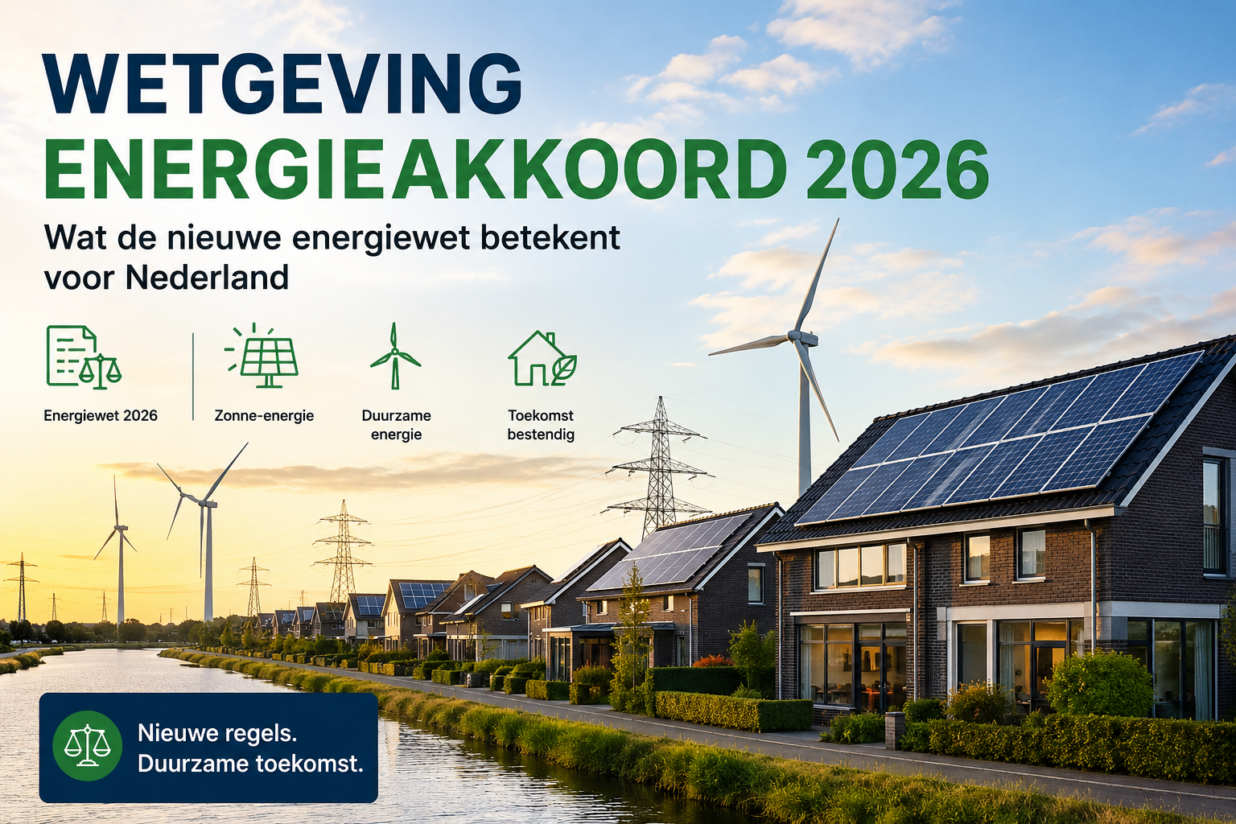
Wetgeving Energieakkoord 2026
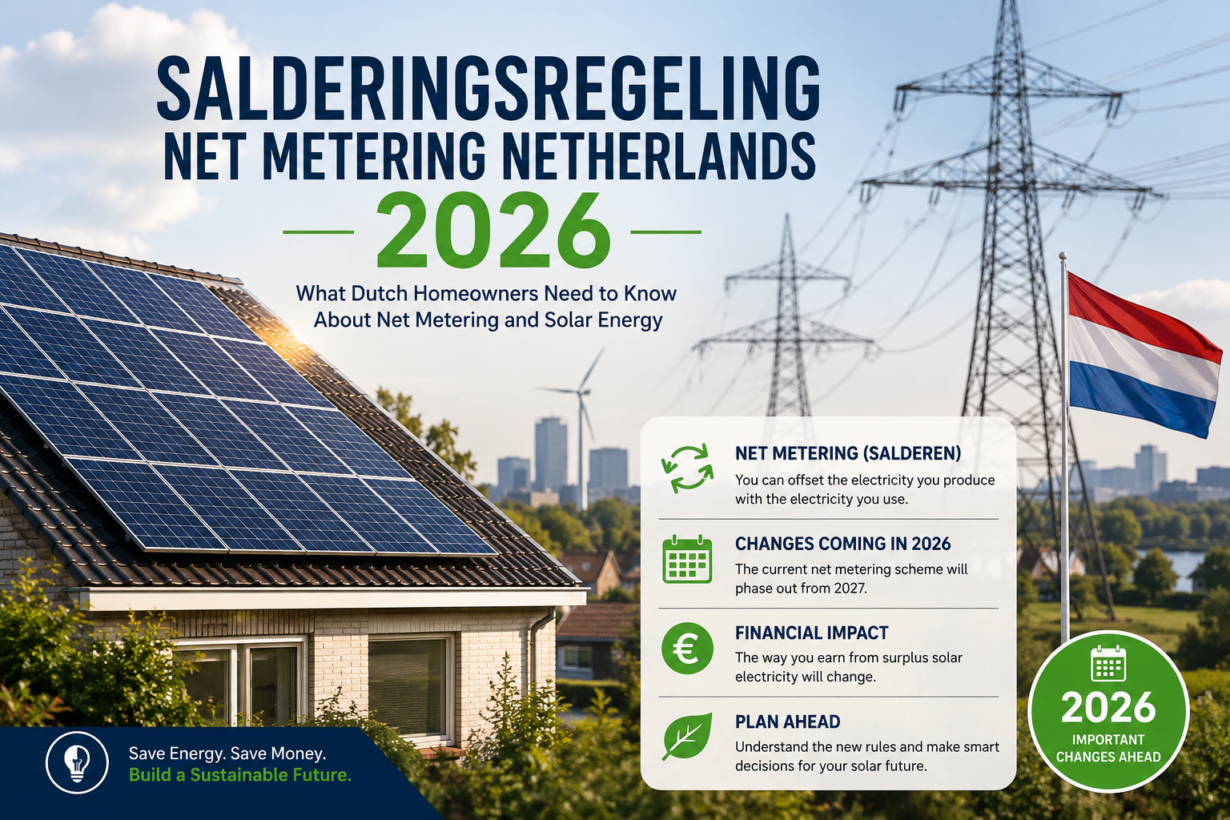
salderingsregeling net metering Netherlands2026
Recommended External Sources
For publication, these are strong sources to reference and periodically recheck:
- ACM / ConsuWijzer – Energy contracts and personalised offers
- ACM ConsuWijzer – Smart meters
- Rijksoverheid – End of the salderingsregeling in 2027
- Consumentenbond – Dynamic energy contracts becoming easier to compare
- ACM – Dynamic energy price contracts